
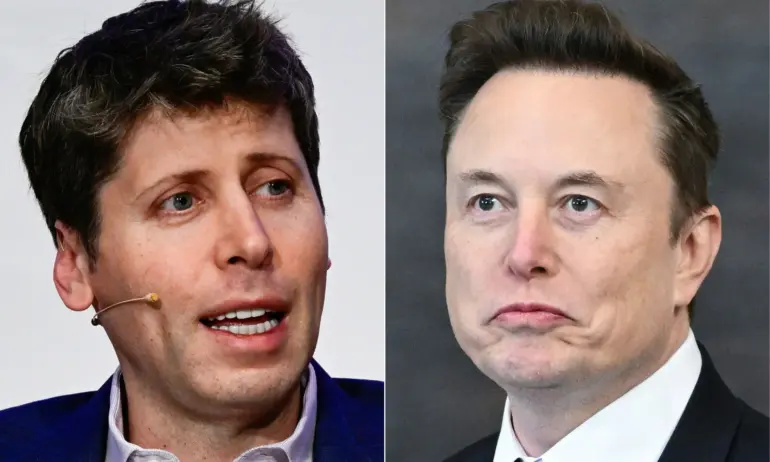
A federal jury on Monday ruled that billionaire entrepreneur Elon Musk waited too long to file his lawsuit against OpenAI and its co-founders, handing a major legal victory to CEO Sam Altman and bringing one of Silicon Valley’s most closely watched courtroom battles to an end.
The jury in Oakland federal court found that Musk’s claims against Altman, OpenAI president Greg Brockman, the OpenAI Foundation and Microsoft were barred by the applicable statutes of limitations, effectively rejecting the core of Musk’s case.
Judge Yvonne Gonzalez Rogers, who had asked the jury to provide an advisory opinion on the issue, accepted and affirmed the verdict.
The three-week trial featured testimony from several prominent technology executives, with Musk arguing that OpenAI abandoned its founding nonprofit mission by transforming into a profit-driven artificial intelligence powerhouse.
The ruling spares OpenAI from what analysts viewed as a potentially existential legal threat.
Had Musk succeeded, he sought to compel OpenAI to return to its original nonprofit structure — a move that could have disrupted the company’s planned IPO and jeopardised relationships with major investors including Microsoft, Amazon and SoftBank, all of which have invested billions in the AI company amid intensifying global competition in artificial intelligence.
Musk had sued OpenAI over its transformation from a nonprofit research lab into the company behind ChatGPT, alleging that Altman and Brockman misused a $38 million donation he made to support AI research intended to benefit humanity.
Before considering the broader allegations, the jury first addressed whether Musk, who filed the lawsuit in 2024 — four years after his final contribution to OpenAI — had acted within the legal filing deadline. Jurors concluded he had not, ending the case before deliberations on the substance of the claims could begin.
Judge Gonzalez Rogers had earlier indicated that while the jury’s decision on the statute of limitations was advisory, she was inclined to follow its recommendation.
Had the case moved forward, jurors and ultimately the court would have examined whether OpenAI’s founders breached commitments made to Musk and improperly redirected charitable contributions toward commercial ambitions.
Dueling billionaires
Closing arguments focused heavily on Altman’s credibility and internal disputes surrounding OpenAI’s leadership.
Musk’s attorney, Steven Molo, questioned Altman’s integrity while invoking OpenAI’s original vision.
“A non-profit devoted to the safe development of artificial intelligence, open-sourced as practical, for the benefit of humanity. You know, we’re supposed to buy that,” Molo told the court on Thursday.
OpenAI attorney Sarah Eddy pushed back by challenging Musk’s own account, citing testimony from Shivon Zilis, a Musk associate and intermediary between the executives.
“Even the people who work for him, even the mother of his children, can’t back his story,” Eddy argued.
During proceedings, Judge Gonzalez Rogers observed that the dispute largely came down to credibility and determining “who to believe among the bickering billionaires.”
Musk left OpenAI in 2018 and later pursued AI development through ventures linked to SpaceX and his startup xAI, which has faced stiff competition from OpenAI and rival AI firm Anthropic.
Altman, who was briefly removed as OpenAI CEO in 2023 before being reinstated following pressure from employees and investors, emerged from the trial with broader allegations about management culture and internal conduct left unresolved by the verdict.
The ruling also cleared Microsoft, OpenAI’s largest private investor, of allegations that it aided the alleged breach of charitable trust, as those claims collapsed alongside the broader case.