

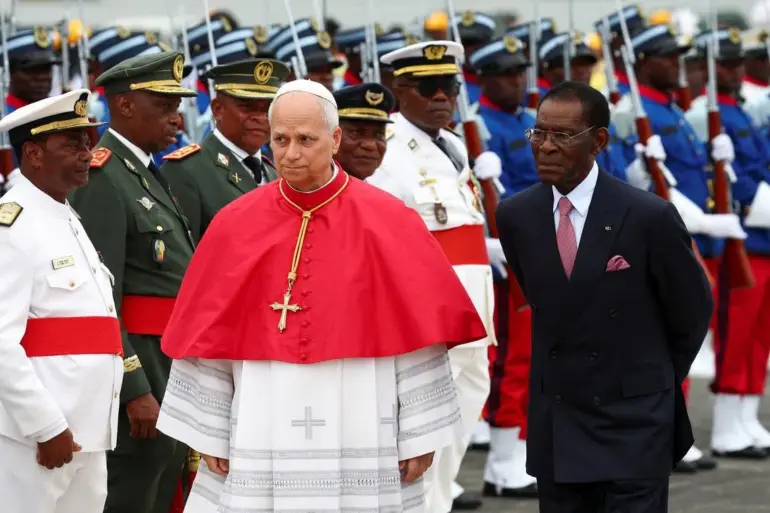
Pope Leo XIV is set to visit Bata prison in Equatorial Guinea on Wednesday, where he is expected to confront the harsh realities of one of the country’s most overcrowded and criticised detention facilities, as he continues his wide-ranging African tour focused on justice, inequality and human dignity.
The visit comes on the second-to-last day of his 11-day trip across Africa, which has already taken him through Algeria, Cameroon and Angola, and has seen him speak forcefully on global inequality, conflict, and governance.
At Bata prison, the pope will meet inmates at a facility long criticised by human rights organisations for severe overcrowding, poor sanitation and alleged mistreatment of detainees. He is also expected to engage with families and young people at the city’s stadium, and honour victims of a 2021 explosion at a nearby munitions depot that killed more than 100 people and injured around 600 others.
Beyond Bata, Pope Leo will travel to Mongomo near the Gabonese border, where he will celebrate Mass and visit a school.
On arrival in Equatorial Guinea on Tuesday, the pope urged authorities to place themselves “in the service of law and justice,” a pointed message in a country frequently accused of human rights abuses.
However, his tone was more restrained compared to earlier stops on the tour, where he sharply criticised global inequality, condemned exploitation by powerful elites, and sparked diplomatic friction after comments on international conflicts drew pushback from US President Donald Trump.
The 70-year-old pontiff faces a delicate balancing act in Equatorial Guinea, supporting a largely Catholic population while avoiding direct endorsement of President Teodoro Obiang Nguema Mbasogo, who has ruled since 1979 and is the world’s longest-serving non-monarchical leader.
Catholics make up roughly 80% of the country’s population, a legacy of Spanish colonial rule, while oil and gas dominate the economy, accounting for nearly half of GDP and over 90% of exports.
Despite this wealth, inequality remains stark. According to Human Rights Watch, vast hydrocarbon revenues largely benefit a small political elite, while much of the population lives in poverty.
The pope’s visit also drew attention to Vice President Teodoro Nguema Obiang Mangue, who attended Tuesday’s events despite long-standing international scrutiny over corruption allegations and his lavish lifestyle.
Pope Leo will conclude his 18,000-kilometre African tour on Thursday with an open-air Mass in the capital Malabo before returning to Rome.
AFP