

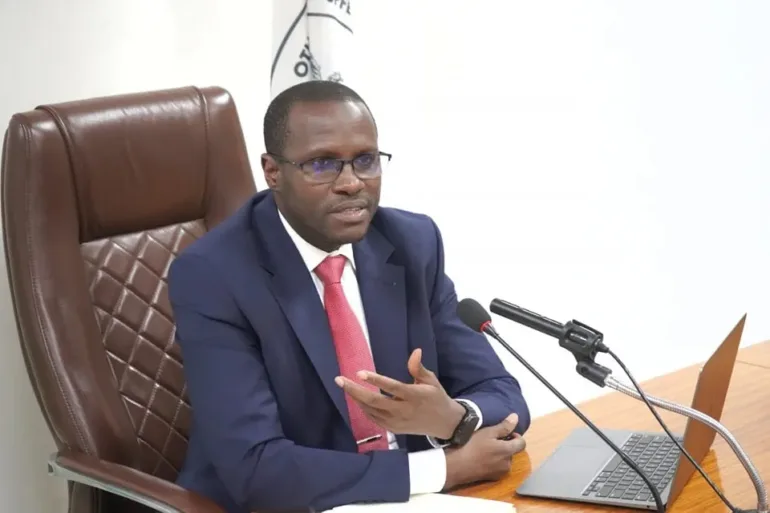
The Chairman of the Independent Corrupt Practices and Other Related Offences Commission (ICPC), Musa Aliyu, has said that weak integrity systems and poor ethical standards remain at the core of Nigeria’s governance and development challenges.
Aliyu stated this on Wednesday while delivering his opening address at the International Conference on Anti-Corruption, Transparency and Integrity in Governance, organised by the Anti-Corruption Academy of Nigeria (ACAN), the training arm of the ICPC, in Keffi, Nasarawa State.
Speaking on the theme “Strengthening Integrity Systems for Sustainable Development and Public Trust in Nigeria,” the ICPC chairman said there is an urgent need to reinforce ethical compliance across all sectors to drive meaningful national development.
“It is an acknowledged fact that lack of integrity and failure in ethical compliance is at the centre of most of the challenges our country is facing today,” he said.
He stressed that the fight against corruption requires collective action from all segments of society, noting that anti-graft agencies alone cannot succeed.
“The anti-corruption fight requires the active participation of public institutions, the private sector, civil society organisations, professional bodies, faith-based organisations, the media, academia and citizens,” he said.
Aliyu added that sustained collaboration and commitment are essential to rebuilding public trust and strengthening governance systems in the country.
He said the conference was designed to promote practical solutions to corruption and encourage evidence-based reforms.
Also speaking, the Provost of ACAN, Prof. Sheriff Ibrahim, described corruption as a major obstacle to Nigeria’s socio-economic development, adding that the conference aims to produce workable policy recommendations.

He noted that weak transparency and poor integrity systems have significantly contributed to Africa’s developmental challenges.
Former Chairman of the Economic and Financial Crimes Commission (EFCC), Abdulrasheed Bawa, also called for a more decisive and action-driven approach to tackling corruption, warning that rhetoric alone would not yield meaningful results.
Nigeria continues to grapple with concerns over corruption, governance deficits and weak institutional accountability, with successive administrations and anti-graft agencies repeatedly calling for stronger integrity systems across public and private institutions.