
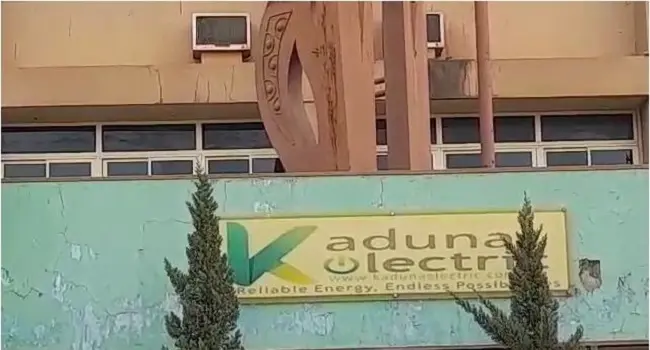
The Nigerian Electricity Regulatory Commission (NERC) has dissolved the board of Kaduna Electricity Distribution Plc (KAEDC) over the company’s N456.5bn cumulative market obligations and prolonged financial and operational challenges.
The regulator also appointed an interim board of special directors and directed the commencement of an open and transparent process to select a new core investor for the electricity distribution company.
The decisions were contained in Order No. NERC/2026/086, titled “Order on the Regulatory Intervention in Kaduna Electricity Distribution Plc Pursuant to the Electricity Act 2023”, which took effect on Monday, August 10, 2026.
NERC said the intervention followed an inquiry and consultations with key industry stakeholders, including the Bureau of Public Enterprises (BPE), and was prompted by KAEDC’s prolonged regulatory and market defaults, inadequate investment, weak operational performance and deteriorating commercial position.
According to the commission, KAEDC’s cumulative market obligations since privatisation stood at approximately N456.5bn as of May 2026. The figure comprises N415.5bn owed to the Nigerian Bulk Electricity Trading Plc (NBET) and N41bn due to the Nigerian Independent System Operator.
The company also had other non-market statutory and third-party obligations amounting to N14.26bn, NERC said.
The regulator said that since ASI Engineering Limited took control of KAEDC in June 2024, the company had accumulated additional market debt of more than N118.6bn as of May 2026.
“The commission, following its inquiry and consultation undertaken with key industry stakeholders including the Bureau of Public Enterprises, finds that Kaduna Electricity Distribution Plc is in a grave situation characterised by prolonged regulatory and market default, inadequate investment, weak operational and commercial performance, insufficient assets relative to liabilities, and inability to present a credible pathway to sustainable recovery,” NERC stated.
The commission said KAEDC remitted only 41.93 per cent of its adjusted market invoices in 2025, resulting in a market shortfall of approximately N46.71bn during the year.
It attributed the poor remittance performance largely to the company’s high aggregate technical, commercial and collection (ATC&C) losses, which reached 71.88 per cent in 2025. NERC said this meant KAEDC accounted for only about 28.2 per cent of the electricity it received and delivered to end-use customers during the period.
NERC also said ASI failed to meet its capital injection commitments to recapitalise the utility.
KAEDC recorded actual capital expenditure of approximately N2.48bn in 2025, against a minimum requirement of N24.51bn, representing just 10 per cent performance, according to the regulator.
The commission further noted that KAEDC’s metering coverage remained between 33.26 per cent and 35.54 per cent since ASI took over the company, despite several interventions aimed at accelerating meter deployment across electricity distribution companies.
NERC said KAEDC’s financial difficulties had persisted despite approximately N6.58bn in regulatory derogations granted between January 2024 and May 2026, as well as aggregate Federal Government intervention disbursements of approximately N53.79bn since July 2018.
“The continued underperformance therefore poses material risk to end-use customers, creditors, market stability and continuity of electricity service,” the commission stated.
It added: “The analysis confirms that KAEDC is experiencing severe liquidity constraints and that its commercial viability and continued participation in the market pose a systemic risk to NESI.”
Failed rescue plan
NERC said it had previously notified KAEDC’s major shareholders and Afrexim Bank of the impending regulatory intervention and asked them to submit a credible plan to address the company’s financial difficulties.
Representatives of ASI, NERC, BPE, Afrexim Bank and Fidelity Bank subsequently met on June 11, 2026, to consider proposals for rescuing KAEDC.
According to NERC, the parties agreed that ASI had failed to comply with conditions attached to its acquisition of a 60 per cent majority stake in KAEDC and had also not fulfilled BPE requirements for finalising the shareholding arrangements.
ASI later requested an extension of up to 24 months to stabilise KAEDC’s cash flow, prioritise critical investments and deliver measurable improvements, including a pathway to full market remittance.
The regulator, however, rejected the request, arguing that ASI had been in effective control of KAEDC since June 2024 without a corresponding improvement in the company’s financial or operational performance.
“The commission, BPE and Afrexim considered this request against the backdrop of ASI being in effective control of KAEDC since June 2024 without a corresponding improvement in the utility’s financial and operational performance, and determined that a further extension of comparable duration was not justifiable in view of the continuing risk to end-use customers and the market,” NERC stated.
Board dissolved, new investor sought
NERC said it subsequently resolved to exercise its powers under Sections 75 to 79 of the Electricity Act 2023 to dissolve KAEDC’s board, preserve the company as a going concern and facilitate a transparent transition to a credible core investor within 12 months.
The commission cited KAEDC’s critical financial condition, the risk that further delays could lead to a disruptive cessation of electricity distribution services, ASI’s failure to fulfil takeover conditions after more than 24 months of effective control, and the need to protect the interests of customers and other stakeholders.
In its determination, NERC said KAEDC had “persistently demonstrated its inability to discharge material obligations” and remained in prolonged default of its obligations under the Electricity Act, its licence and other regulatory instruments.
The regulator also cited governance conditions it said were detrimental to stakeholders, insufficient assets relative to liabilities, and material insolvency and receivership risks.
Consequently, NERC ordered the dissolution of KAEDC’s board and the removal of all its directors from office.
“KAEDC’s board of directors is HEREBY DISSOLVED. All directors of KAEDC are removed from office, and the existing board stands dissolved pursuant to section 75 of the EA,” the order stated.
The commission appointed seven special directors to constitute the interim board during the transition period, with Dr Abdullahi Garba as chairman.
The other members are Engr Francis Agoha, Mr Aliyy Aliyu, retired Major General Henry Ayamasaowei, Dr Haliru Dikko, Mr Ayodeji Gbeleyi, representing the BPE, and Dr Abubakar Umar Hashidu.
NERC also appointed KAEDC’s incumbent Managing Director and Chief Executive Officer, Dr Abubakar Umar Hashidu, as administrator for an initial six-month term, subject to review by the commission.
“The incumbent Managing Director/Chief Executive Officer, Dr Abubakar Umar Hashidu, is hereby appointed as Administrator for an initial term of six months subject to review of the Commission,” the order stated.
The administrator will serve as the chief executive of the utility, with responsibility for ensuring continuity of electricity service, managing day-to-day operations, implementing interim board resolutions, complying with NERC directives and safeguarding the company’s assets and records.
NERC also withdrew the Know-Your-Licensee approvals issued to members of KAEDC’s management team and directed affected executives to present themselves for revalidation.
Meanwhile, the commission directed Afrexim Bank to coordinate an open, competitive and transparent process for securing a replacement core investor for KAEDC.
The preferred investor must be presented to NERC for approval, with the process expected to be completed within 12 months of the commencement of the order, unless the commission grants a written extension.
