

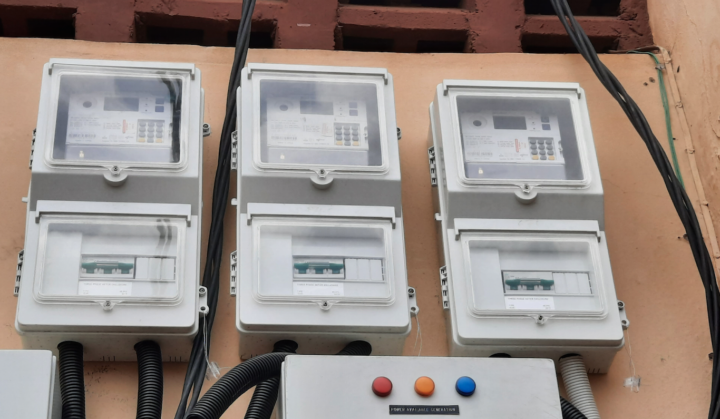
The Association of Meter Manufacturers of Nigeria (AMMON) has secured a court injunction halting the procurement of 1.55 million smart meters, a development that now poses a major setback to the World Bank’s $500 million Nigeria Distribution Sector Recovery Programme (DISREP).
According to the World Bank’s latest Implementation Status and Results Report, obtained on Friday, the legal action has become the most significant implementation risk under the programme and could lead to the cancellation of the procurement if not resolved promptly.
The injunction has stalled the opening of bids under the second phase of the International Competitive Bidding (ICB2) process for additional smart meters.
“The most significant implementation risk at present is the court injunction obtained by the Association of Meter Manufacturers of Nigeria on April 30, 2026, which has halted the opening of bids for the procurement of 1.55 million additional smart meters (ICB2),” the report stated.
AMMON, which represents local meter manufacturers and assemblers, had argued that the international procurement framework excluded Nigerian firms and undermined domestic industry development.
The Transmission Company of Nigeria Project Management Unit has since extended bid submission deadlines three times, with the latest set for June 25, 2026.
The World Bank warned that failure to resolve the dispute could force the cancellation of the procurement to avoid market uncertainty, rising costs and further delays.
“The team is engaging with government counterparts to find a resolution. If the matter cannot be resolved in the near term, cancellation of the ICB2 procurement may need to be considered,” it said.
DISREP, approved in February 2021, is aimed at improving the financial and technical performance of Nigeria’s electricity distribution companies through reforms, metering and network upgrades.
Despite the setback, the World Bank said overall implementation had improved, maintaining a “Moderately Satisfactory” rating for both project progress and development objectives. This marks an upgrade from “Moderately Unsatisfactory” six months earlier.
The report also noted significant progress in smart meter deployment under the first procurement phase. As of June 15, 2026, about 1.23 million meters had been manufactured, 1.03 million delivered to Nigeria, and 482,000 installed, up from 365,000 at the last review.
The bank said the programme had provided direct electricity access to about 530,000 people under the Mission 300 initiative, with more expected as installations continue.
However, it warned that delays in resolving contractual disputes involving the Bureau of Public Enterprises (BPE) and the Independent Verification Agent remained a critical risk. BPE has yet to submit a revised scope of work to the World Bank for approval.
The report also revealed that contracts for 217,000 locally procured meters under the National Competitive Bidding process were in advanced stages but could not be signed pending resolution of the AMMON injunction.
Similarly, contracts for the Meter Data Management System, delayed since mid-2025, are expected to be finalised before the end of June.

On financing, the World Bank said the BPE had begun disbursing a $37.5 million advance to distribution companies in phases, subject to performance-based conditions.
Meanwhile, preparations for an additional $308 million financing package are progressing, with the concept note completed and review processes underway.
The report showed that only $87.34 million (17.47 per cent) of the $500 million facility had been disbursed as of June 2026, while the programme’s closing date has been extended to May 30, 2028.
Despite ongoing challenges, key performance indicators showed gradual improvement, including a reduction in the metering gap to 57.27 per cent and billing efficiency rising to 82.02 per cent.
However, the World Bank maintained the programme’s overall risk rating at “Substantial”, citing political, institutional, fiduciary and macroeconomic risks affecting implementation.