

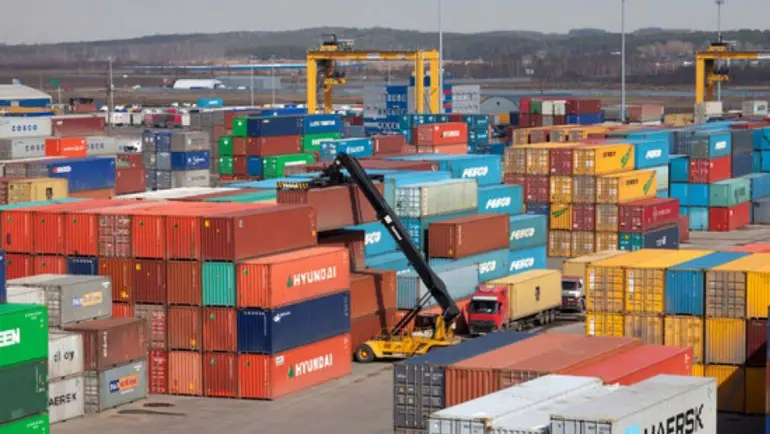
Nigeria is among 60 economies hit by a new round of US tariffs that took effect on Friday, as President Donald Trump’s administration rolled out fresh trade duties targeting major trading partners.
Under the new measures, Nigerian exports to the United States will face a 12.5 per cent tariff, placing Africa’s largest economy alongside countries including China, Australia, Brazil, South Africa and Vietnam.
The new tariffs, ranging from 10 per cent to 12.5 per cent, replace a temporary 10 per cent global duty imposed earlier this year after the US Supreme Court struck down a broader set of Trump-era tariffs.
US Trade Representative Jamieson Greer said the latest measures followed a months-long investigation and were designed to withstand legal challenges.
“The United States has had a forced labour import ban for nearly a century and rigorously enforces it; it’s well past time for our trading partners to do the same,” Greer said.
He added that the targeted economies account for the bulk of US trade.
Countries that have adopted or committed to enforcing bans on imports made with forced labour—including Canada, India, the United Kingdom and the European Union—were assigned the lower 10 per cent tariff.
Nigeria, along with China, Japan, South Korea and dozens of other countries, was placed in the 12.5 per cent category. However, the European Union, Taiwan, Japan, South Korea and Switzerland secured limited relief under previously negotiated trade agreements with Washington.
The tariffs drew swift criticism from affected countries. Japan expressed regret over the move, Australia’s trade minister described the measures as “unjustified,” while China condemned what it called unilateral tariff actions and warned that trade wars benefited no one.
Certain products, including steel and aluminium already subject to sector-specific tariffs, as well as some energy products, fertilisers and goods covered by the US-Mexico-Canada Agreement, are exempt from the latest measures.
More tariffs possible
The Trump administration is also investigating 16 economies over alleged excess industrial capacity, a process that could result in additional country-specific tariffs.
Trade experts say the new baseline duties allow Washington to maintain leverage in future trade negotiations while making the tariffs more resilient against court challenges.
Greta Peisch, a former general counsel at the Office of the US Trade Representative, said the investigations strengthened the legal basis for the measures, making them more likely to remain in place throughout Trump’s presidency.
Josh Lipsky of the Atlantic Council said the policy signals a more protectionist US economy while generating additional government revenue.
The latest tariffs follow a series of recent trade actions by Washington, including a 25 per cent tariff on a range of Brazilian goods over alleged unfair trade practices and new 50 per cent duties on many Canadian products, which Trump said were in response to Canada’s treatment of US alcohol, automobile and dairy exports.
Analysts say the latest moves underscore that US trade agreements remain fluid and that additional tariffs could follow.
Countries subject to the new tariffs
- 10% tariff: Argentina, Bangladesh, Cambodia, Canada, Ecuador, El Salvador, Guatemala, Honduras, India, Indonesia, Jordan, Malaysia, Mexico, Pakistan, Sri Lanka, Trinidad and Tobago, United Kingdom and the European Union (subject to existing tariff arrangements).
- 12.5% tariff: Nigeria, Algeria, Angola, Australia, Bahamas, Bahrain, Brazil, Chile, China, Colombia, Costa Rica, Dominican Republic, Egypt, Guyana, Hong Kong, Iraq, Israel, Japan, Kazakhstan, Kuwait, Libya, Morocco, New Zealand, Nicaragua, Norway, Oman, Peru, Philippines, Qatar, Russia, Saudi Arabia, Singapore, South Africa, South Korea, Switzerland, Taiwan, Thailand, Türkiye, United Arab Emirates, Uruguay, Venezuela and Vietnam.
AFP