

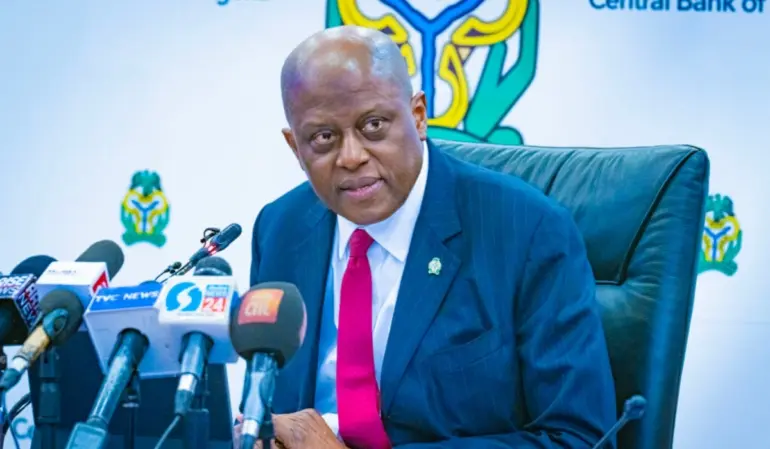
The Governor of the Central Bank of Nigeria (CBN), Olayemi Cardoso, has launched the CBN Naira Ambassadors Club, a youth-focused initiative aimed at promoting respect for and proper handling of the national currency.
The programme, inaugurated in the Federal Capital Territory and comprising secondary school students, is designed to discourage the abuse of banknotes and encourage responsible currency handling among young Nigerians.
Speaking at the event, Cardoso said the Naira represents more than a medium of exchange, describing it as a symbol of national identity and economic sovereignty.
“The Naira is much more than paper and polymer. It is the legal tender of the Federal Republic of Nigeria. It facilitates trade, supports economic activity, enables savings and investment, and serves as a visible expression of our national identity and sovereignty,” he said.
He added that each banknote carries elements of national heritage, including portraits of distinguished Nigerians, national symbols, and security features designed to maintain public confidence in the monetary system.
“Every Nigerian has a responsibility to treat the Naira with respect,” Cardoso said.
The CBN governor noted that significant resources are invested in producing clean, durable and secure banknotes, warning that improper handling accelerates wear and increases replacement costs.
“When banknotes are defaced, mutilated or mishandled, they deteriorate more quickly than intended. This increases replacement costs, disrupts currency circulation and places avoidable financial burdens on the country,” he said.
He stressed that protecting the currency is not only an operational responsibility of the central bank but also a national duty.
Deputy Governor for Operations, Emem Usoro, described the initiative as part of the CBN’s ongoing efforts to safeguard one of the country’s key national assets.
“Every nation takes pride in its currency because it represents more than a medium of exchange. It embodies sovereignty, economic stability, public confidence and our collective identity,” she said.

Usoro decried practices such as writing on banknotes, stapling, spraying at events, squeezing notes, and other forms of mutilation, noting that they shorten the lifespan of the currency and increase replacement costs.
She emphasised that sustainable behavioural change must be driven through education and awareness, particularly among young people.
“The vision behind this initiative is to equip young Nigerians with the knowledge and values to become advocates for proper currency handling in their schools, families and communities,” she said.
Director of Currency Operations and Branch Management, Adetona Adedeji, also described the protection of the Naira as a civic responsibility, adding that the campaign would be expanded nationwide to discourage currency abuse, including spraying at social events.