

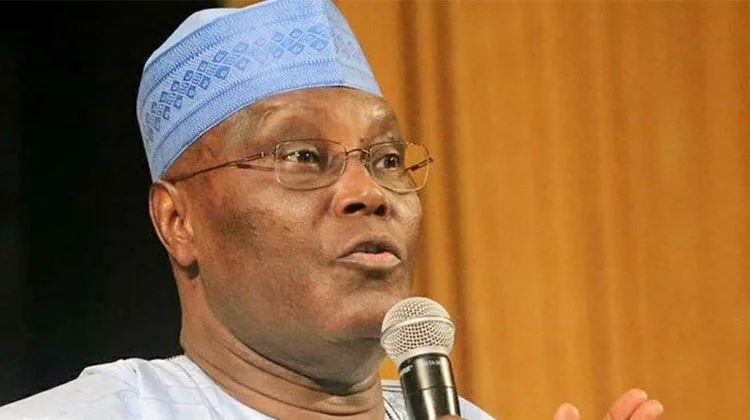
Former Vice President Atiku Abubakar has accused the Federal Government of running what he described as a “racket dressed up as reform” through repeated borrowing to settle debts in the power sector, demanding full disclosure on previous interventions before any fresh bond issuance.
In a statement issued on Sunday through his Senior Special Assistant on Public Communication, Phrank Shaibu, Atiku criticised the government’s plan to raise a new bond—reportedly increasing power sector liabilities to N4tn—as “a scandalous display of fiscal recklessness, institutional dishonesty, and contempt for public accountability.”
He said Nigerians were justified in demanding answers over what he described as a recurring cycle of borrowing to address the same obligations without clear disclosure on how previous funds were utilised.
“Nigerians have every right to be outraged by what is fast becoming a recurring cycle of borrowing, deception, and non-disclosure under the Tinubu administration,” the statement read.
Atiku recalled that the Federal Government had previously announced multiple debt-clearing initiatives for the power sector, yet outstanding liabilities reportedly remain unresolved.
He cited that on December 20, 2025, the government announced a N590bn bond to clear debts owed to electricity generation companies and gas suppliers, followed by another N501bn bond under the same programme, which was reportedly fully subscribed and earmarked for settlement of verified obligations.
He further noted that in April 2026, President Bola Tinubu approved a N3.3tn plan to clear additional power sector debts, presented as a major step toward stabilising the electricity market.
However, Atiku said recent disclosures by the Association of Power Generation Companies indicated that many of the debts remain unpaid.
He referenced comments attributed to the association’s Chief Executive Officer, Joy Ogaji, suggesting that payments from earlier bond issuances had yet to reach some creditors.
“In simple terms, billions were raised, announcements were made, and victory was declared, but creditors are still waiting for payment,” the statement added.
Atiku also pointed to President Tinubu’s June 12 Democracy Day address, in which the president highlighted fresh interventions in the power sector as evidence of ongoing reforms, arguing that this contrasted with unresolved questions over earlier funding rounds.
“What makes this development even more troubling is that President Bola Tinubu, in his June 12 Democracy Day address, publicly referenced a fresh debt-clearing initiative,” he said.
He argued that accountability, rather than repeated announcements, should define governance performance.
“Democracy is not sustained by grand declarations; it is sustained by accountability,” he stated.
Atiku further demanded detailed disclosure of all funds raised under power sector debt settlement programmes, including amounts disbursed, beneficiaries, and outstanding obligations.
He likened the recurring interventions to “repeatedly returning to the marketplace with the same goat said to have been sold the previous day,” describing the situation as unsustainable.
“There is a name for repeatedly collecting money to solve the same problem while the problem remains unresolved. It is called a racket,” he said.
He warned that the pattern of announcing crises, raising funds, declaring success, and returning for new borrowing without transparency would attract scrutiny in any accountable system.
Atiku also highlighted the impact of the sector’s challenges on ordinary Nigerians, citing rising electricity costs, business closures, and increased reliance on alternative power sources.
“Businesses are collapsing under rising energy costs. Manufacturers are struggling to remain competitive. Families are spending a significant portion of their income on alternative power,” he said.
He urged the Federal Government to publish a comprehensive breakdown of all interventions, including funds raised, payments made, and outstanding liabilities.
“Anything short of full disclosure will reinforce the perception that the power sector has become a conduit for financial opacity rather than national development,” he added.
Concluding, Atiku warned against further borrowing without accountability.
“No serious nation continues to borrow its way into darkness,” he said. “Before another bond is issued, Nigerians deserve answers.”
The Federal Government has yet to respond to the allegations.
Nigeria’s power sector has long grappled with mounting debts to generation companies and gas suppliers, a challenge that has constrained investment and affected electricity supply. Successive administrations have introduced intervention funds to stabilise the sector, but concerns over transparency and effectiveness have persisted.
