

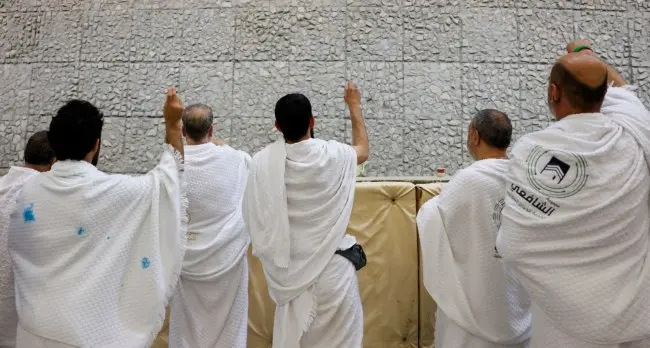
Muslim pilgrims on Wednesday performed the climactic ritual of the annual Hajj pilgrimage, symbolically stoning the devil near Mecca.
From dawn, crowds gathered in the Mina valley, southeast of the holy city, to cast pebbles at concrete pillars representing the devil. The ritual commemorates the Prophet Abraham’s rejection of Satan at three sites where, according to Islamic tradition, he was tempted to disobey God’s command to sacrifice his son Ishmael.
More than 1.7 million people are taking part in this year’s Hajj, a once-in-a-lifetime obligation for Muslims who are physically and financially able to undertake the journey.
Islam’s most important pilgrimage has, for a third consecutive year, been overshadowed by conflict — this time the US-Israeli confrontation with Iran that has drawn in Gulf states.
A fragile ceasefire, in place since April 8, has largely halted fighting, though diplomatic efforts to secure a lasting peace have so far yielded no conclusive results.
The Hajj, which unfolds over several days and involves a series of largely outdoor rituals, is taking place amid intense heat. On Tuesday, pilgrims gathered on Mount Arafat, where the Prophet Muhammad is believed to have delivered his final sermon, enduring temperatures of up to 45°C.
They then spent the night at Muzdalifah, a site between Arafat and Mina, collecting pebbles for the stoning ritual.
After completing the rite, pilgrims return to Mecca for a final circumambulation of the Kaaba, the cube-shaped structure at the centre of the Grand Mosque toward which Muslims around the world pray.

The concluding day of Hajj coincides with Eid al-Adha, the festival marking the story of Abraham’s willingness to sacrifice his son before divine intervention provided a ram in his place. The holiday is traditionally observed with the slaughter of a sheep, with portions of the meat distributed to those in need.
AFP
