

The Lagos State Government says it plans to phase out the electricity band classification system introduced by the Nigerian Electricity Regulatory Commission in 2024 as part of efforts to ensure stable power supply across the state.
In April 2024, the NERC categorised electricity consumers into Bands A to E. Band A customers, regarded as premium users, are required to pay the full cost of electricity in exchange for a minimum of 20 hours of daily power supply, while customers in lower bands continue to receive government subsidies with fewer hours of electricity.
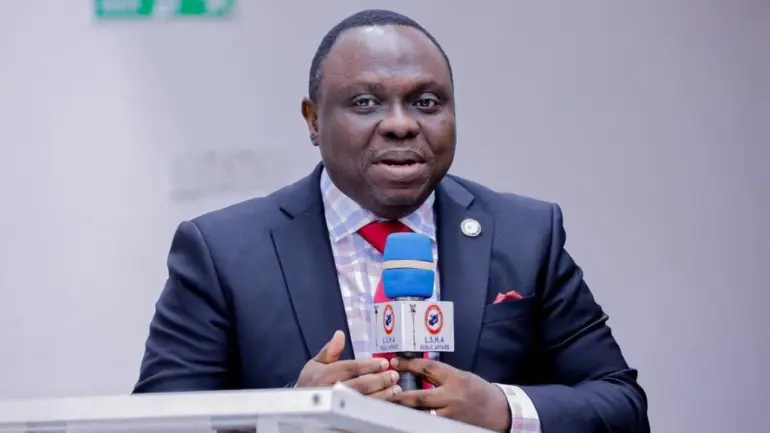
Speaking during a ministerial press briefing in Alausa, Ikeja, on Monday, the Lagos State Commissioner for Energy and Mineral Resources, Biodun Ogunleye, said the state government was working towards a system where all residents enjoy reliable electricity without the need for band classifications.
According to him, the Lagos State Electricity Regulatory Commission, which now oversees the state’s electricity market, is pursuing Governor Babajide Sanwo-Olu’s vision of stable power supply for all households and businesses.
“Part of what we are trying to achieve is an environment that eliminates banding,” Ogunleye said.
“Banding means people receive three, eight, 12 or 21 hours of electricity. What we are asking is: why can’t we have continuous power supply? The governor has challenged us repeatedly to make 24-hour electricity possible in Lagos.
“I strongly believe we can achieve it. We have seen it happen before in this city, so banding is not where we want to focus our attention.”
Ogunleye also stated that the Lagos State Government would not sustain electricity subsidies, noting that residents would eventually pay the actual cost of power supply in line with the administration’s policy direction.
He said the state had expanded solar streetlight projects, strengthened electricity infrastructure, and accelerated clean energy initiatives as part of efforts to build a reliable 24-hour economy.
According to the commissioner, the state has intensified implementation of the Lagos State Electricity Law 2024 to create a competitive electricity market driven by private sector participation.
He added that Lagos had updated its Integrated Resource Plan and completed a Strategic Implementation Plan designed to end the single-buyer electricity model and encourage bilateral energy trading.
Ogunleye said the Lagos State Electricity Regulatory Commission had strengthened licensing and enforcement activities, while the Lagos Independent System Operator was being positioned to improve grid stability and overall market performance.
On renewable energy deployment, he disclosed that the government had replaced 22,000 conventional streetlights with smart solar-powered systems along major roads and highways, including the Gbagada-Oshodi Expressway, Lekki-Epe Expressway, Ikorodu Road, and Funsho Williams Avenue.
He added that another 20,000 solar streetlights had been installed, bringing the total number of operational smart solar streetlights in Lagos to about 42,000.
The commissioner also highlighted improvements in electricity supply to critical public facilities. He said Gbagada General Hospital now receives between 21 and 22 hours of electricity daily following the installation of 2MVA and 1MVA transformers.
He further revealed that lithium-ion battery storage systems had been deployed across 11 primary healthcare centres and 52 secondary schools, while Lagos State Television had been equipped with a 200KVA solar-powered energy system.
