


Oil prices climbed further above $100 a barrel on Monday, while global stock markets fluctuated as the war involving Iran entered its third week, with both sides showing no sign of backing down and diplomats working to secure safe passage for tankers through the strategic Strait of Hormuz.
Crude surged in early trading after Donald Trump said at the weekend that US forces had struck military targets on Kharg Island, which handles the bulk of Iran’s oil exports.
Trump also warned that attacks could extend to energy infrastructure if Tehran interferes with shipping through the Strait of Hormuz, which has effectively been closed since US–Israel military operations began on February 28.
However, Iran’s Fars News Agency reported shortly afterwards that the strikes did not damage oil facilities.
Trump urged other countries to deploy naval vessels to help keep the vital waterway open, suggesting participation from China, France, Japan, South Korea and the United Kingdom.
Writing on his Truth Social platform, he said nations dependent on oil shipments through the strait should help protect the route.
“This should have always been a team effort, and now it will be,” he wrote.
Japan said Monday it was “not at the moment considering issuing a maritime security operation”, while Australia also said it would not send naval ships to the region.
Trump added that Tehran wanted a deal to end the conflict but that Washington was not prepared to negotiate under current terms.
Iran’s Foreign Minister, Abbas Araghchi, dismissed the prospect of talks with the United States.
“We don’t see any reason why we should talk with Americans, because we were talking with them when they decided to attack us,” he told CBS’s Face the Nation in an interview aired Sunday.
He added that Iran had not requested a ceasefire but was willing to engage with countries seeking assurances about the safe passage of their vessels.
“I cannot mention any country in particular, but we have been approached by a number of countries,” Araghchi said.
Fighting continued on Monday, with Saudi Arabia saying it had intercepted more than 60 drones since midnight. Flights were also temporarily suspended at Dubai International Airport following a drone-related incident that sparked a fire nearby.
Araghchi condemned Israeli strikes on fuel depots in Tehran, describing them as “ecocide” because of the long-term health risks to residents.
Investors hoping for a quick end to the conflict were also disappointed after Trump’s top economic adviser, Kevin Hassett, said Pentagon estimates suggested the military operation could last up to six weeks, although it was progressing ahead of schedule.
Both major crude benchmarks rose. Brent Crude jumped about three percent to as high as $106.50 before easing to around $104, while West Texas Intermediate traded just above $99 a barrel.
The rally came as Japan began releasing crude from its strategic reserves after the International Energy Agency indicated earlier that emergency stock releases would start in Asia and Oceania before other regions.
IEA member countries last week agreed to release a record 400 million barrels from reserves to cushion the surge in oil prices caused by the war.
With concerns growing about a possible energy crisis that could hit the global economy, equity markets remained under pressure. Tokyo, Shanghai, Sydney, Wellington, Taipei, Manila and Jakarta all fell, while Hong Kong, Seoul, Singapore, Mumbai and Bangkok recorded gains.
Analysts said the outlook for markets would depend heavily on developments around the Strait of Hormuz.
“The impact of geopolitical events on markets, and the macro outlook, hinges more on when transits through the Strait of Hormuz begin to normalise than when hostilities end,” said Michael Brown of Pepperstone.
“The longer the strait remains impassable, the tighter commodity supply will become, pushing prices higher and increasing inflationary pressure.”
Economic concerns were compounded by data released Friday showing the US economy grew by just 0.7 percent in the fourth quarter, much slower than the earlier estimate of 1.4 percent.
Separate figures showed the Federal Reserve’s preferred inflation gauge eased to 2.8 percent in January, before the latest surge in energy prices.
Investors are also watching policy meetings this week at several major central banks, including the Federal Reserve, the Bank of England and the European Central Bank, for signals on how the conflict could affect their economic outlook.
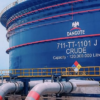
Key Figures At Around 0700 GMT
West Texas Intermediate: UP 0.6 per cent at $99.30 per barrel
Brent North Sea Crude: UP 1.5 per cent at $104.68 per barrel
Tokyo – Nikkei 225: DOWN 0.1 per cent at 53,751.15 (close)
Hong Kong – Hang Seng Index: UP 1.4 per cent at 25,832.06
Shanghai – Composite: DOWN 0.3 per cent at 4,084.79 (close)
Euro/dollar: UP at $1.1426 from $1.1416 on Friday
Pound/dollar: UP at $1.3242 from $1.3223
Dollar/yen: DOWN at 159.40 yen from 159.74 yen
Euro/pound: DOWN at 86.27 pence from 86.33 pence
New York – Dow: DOWN 0.3 per cent at 46,558.47 points (close)
London – FTSE 100: DOWN 0.4 per cent at 10,261.15 (close)
AFP