

Spain’s left-leaning government announced on Monday that it will release classified documents related to the failed 1981 coup attempt, describing the move as a step toward settling a “historical debt” with citizens.
The coup, which took place on February 23, 1981, occurred six years after the death of General Francisco Franco. It was led by military officers longing for the privileges they had enjoyed during more than four decades of dictatorship. The event is widely regarded as a critical moment when Spain’s fragile transition to democracy teetered, but ultimately endured.
Despite decades of study, historians say key questions remain, including the full extent of the conspiracy network and which military figures supported it.
“Memory cannot be locked away. Tomorrow we will declassify the 23-F documents to repay a historic debt to the public. Democracies must understand their past to build a freer future,” Socialist Prime Minister Pedro Sánchez wrote on X, referencing the date of the coup.
Government sources said the cabinet is expected to formally approve the declassification on Tuesday, with the documents becoming publicly accessible the following day via the official website of La Moncloa, the seat of the Spanish government.
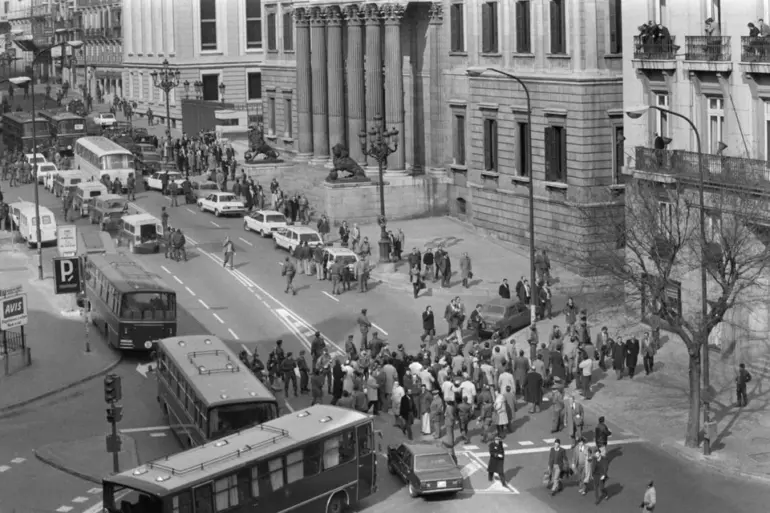
On that day in 1981, Spain’s fledgling democracy was shaken when rebellious civil guards, led by Lieutenant Colonel Antonio Tejero Molina, stormed parliament and held lawmakers at gunpoint for nearly 24 hours. The siege ended only after it became clear that King Juan Carlos, Franco’s designated successor, would not support the uprising. The king later addressed the nation on television, declaring that the monarchy would not tolerate any attempt to interrupt the democratic process by force.
General Alfonso Armada, once considered close to the king, was sentenced to 30 years in prison for his involvement in the plot, accused of seeking to lead a military-backed government intended to “correct” Spain’s democratic transition.

Writer Javier Cercas, author of a book on the events, described the coup’s failure as “the founding myth of Spanish democracy,” telling El País that it marked the end of two centuries of military intervention in Spanish politics.
AFP
