

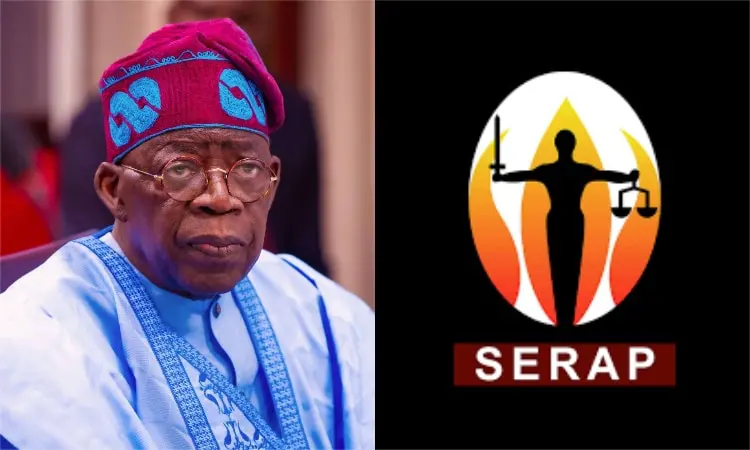
The Socio-Economic Rights and Accountability Project (SERAP) has given President Bola Tinubu seven days to direct the Nigeria Data Protection Commission (NDPC) to investigate allegations of artificial intelligence-generated photographs and the alteration of personal data in the Independent National Electoral Commission’s (INEC) preliminary Register of Voters.
SERAP also threatened legal action against the Federal Government, NDPC, INEC and other relevant authorities if its demands are not addressed within the stipulated period.
In a letter dated October 31, 2026, and signed by its Deputy Director, Kolawole Oluwadare, the organisation urged Tinubu to direct the NDPC National Commissioner and Chief Executive Officer, Dr Vincent Olatunji, to conduct an independent forensic investigation into the alleged irregularities.
It asked the commission to establish the nature and extent of the suspected alterations, determine whether a personal data breach occurred, identify those responsible and ensure that affected Nigerians can verify and correct their records without being unfairly excluded from the electoral process.
The petition follows INEC’s October 27 acknowledgement of suspected AI-generated photographs and questionable registration records identified during the nationwide display of the preliminary voter register between October 9 and 15, 2026.
INEC had disclosed that it was investigating the suspicious records, including possible technical or procedural lapses, while undertaking corrective measures ahead of the certification of the final Register of Voters on December 15, 2026.
SERAP, however, maintained that the electoral commission’s internal review was not sufficient, insisting that the NDPC must independently exercise its statutory data-protection mandate.
“An internal review by INEC cannot substitute for the NDPC’s independent exercise of its statutory data-protection mandate,” the organisation stated.
It argued that the alleged irregularities raised serious concerns about the security and integrity of Nigerians’ personal information and the reliability of the voter register ahead of the 2027 general elections.
“The reported irregularities raise serious concerns about the security and integrity of Nigerians’ personal data and the reliability of the voter register ahead of the 2027 general elections,” the letter read.
SERAP urged the NDPC to conduct an independent forensic examination of INEC’s affected databases and systems to determine whether personal information was unlawfully accessed, altered or manipulated.
It also called on the commission to establish whether INEC complied with the Nigeria Data Protection Act 2023, particularly Sections 24, 39 and 65, which provide for the accuracy and security of personal data and define personal data breaches.
The organisation further asked the NDPC to determine whether INEC fulfilled its obligations regarding the notification and documentation of any suspected data breach under the Act.
SERAP warned that the alleged manipulation of voter registration records could undermine public confidence in the electoral process, compromise the accuracy of the register and expose eligible voters to the risk of wrongful exclusion.
It also cited Section 37 of the 1999 Constitution, which guarantees the right to privacy, as well as Article 13 of the African Charter on Human and Peoples’ Rights and Article 25 of the International Covenant on Civil and Political Rights, which protect citizens’ rights to participate in public affairs and vote in genuine elections.
The organisation maintained that the reported involvement of registration officers with authorised access to INEC’s database made an independent investigation particularly necessary to determine whether existing safeguards were circumvented or abused.

It called for the publication of the NDPC’s findings and recommendations, subject to lawful protections, as well as appropriate sanctions where violations are established.
SERAP also urged the authorities to strengthen security measures and introduce accessible procedures through which affected voters can verify and correct their information without being unfairly disenfranchised.
The organisation stressed that the investigation and necessary corrective measures must be completed before INEC finalises the voter register for the 2027 general elections.
In its letter, SERAP gave the President seven days from receipt or publication of the correspondence to ensure that the requested measures were initiated.
It warned that failure to act within the period would compel it to consider appropriate legal action and other lawful measures in the public interest.
The organisation maintained that protecting Nigerians’ personal information, safeguarding the integrity of electoral institutions and ensuring citizens’ right to vote were essential to public confidence in the country’s democratic process.