

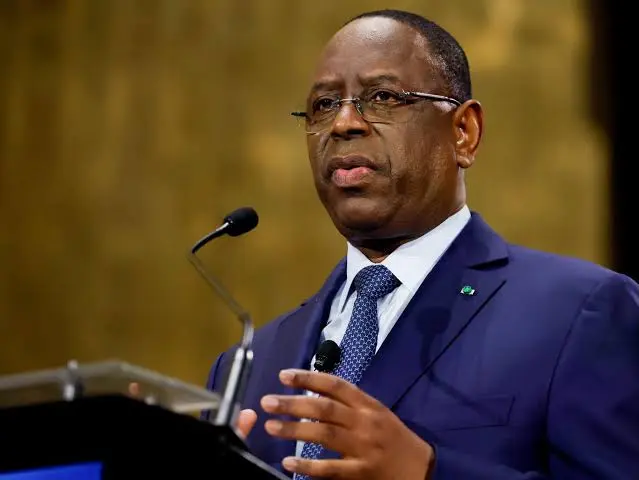
Former Senegalese president Macky Sall on Saturday withdrew from the seven-candidate race to become the next United Nations secretary-general, a day after an informal UN Security Council poll failed to produce a clear frontrunner.
In a statement published on social media, Sall said he had taken note of the poll results and hoped to contribute to the emergence of a consensus candidate within the Security Council.
He added that the results of successive informal ballots suggested a preference for a candidate, potentially a woman, from the Latin America and Caribbean region.
A UN diplomat said on Friday that all seven candidates had received at least one “discourage” vote in the anonymous, informal polling process, effectively signalling a potential veto from a permanent member of the Security Council.
Costa Rica’s Rebeca Grynspan, who had emerged as one of the frontrunners in five previous rounds of polling, received the highest number of “encourage” votes. However, she also received five “discourage” votes, including two from permanent members of the 15-member council.
US media reports have suggested that Washington opposes all seven candidates.
Meanwhile, diplomats have identified several potential contenders who could enter the race, including Nickolay Mladenov, the high representative for Gaza under the US-backed “Board of Peace”, and Lana Nusseibeh, the United Arab Emirates’ minister of state for foreign affairs.
Feridun Hadi Sinirlioglu of Turkey, secretary-general of the Organization for Security and Co-operation in Europe (OSCE), has also been mentioned as a possible candidate.
The other candidates include Guyana’s former foreign minister, Carolyn Rodrigues-Birkett; Rafael Grossi of Argentina, who heads the UN nuclear watchdog; Ecuador’s Ivonne A-Baki and Maria Fernanda Espinosa; and Uganda’s Olara Otunnu.
The outgoing secretary-general, Antonio Guterres of Portugal, is due to complete his second five-year term on December 31.
Under the selection process, a candidate must secure at least nine votes from the 15-member Security Council and avoid a veto from any of its five permanent members: China, France, Russia, the United Kingdom and the United States.
The deeply divided positions of the major powers could complicate efforts to reach a consensus on Guterres’s successor.
AFP