

The Trade Union Congress of Nigeria (TUC) has rejected the Federal Government’s proposed ₦70,000 wage award, demanding an immediate salary increase for workers and the implementation of outstanding agreements with health workers under the Joint Health Sector Unions (JOHESU).
The congress described temporary wage awards as inadequate to address the growing cost-of-living crisis, insisting that workers need permanent salary adjustments rather than relief measures that may be inconsistently implemented.
It also accused the Federal Government of failing to fully implement the 2023 wage award and neglecting a seven-month-old agreement on the adjustment of the Consolidated Health Salary Structure (CONHESS) for health workers under JOHESU.
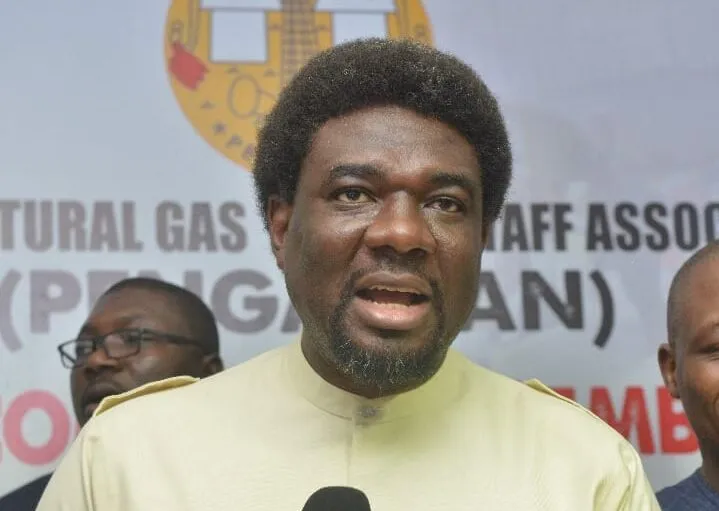
The TUC stated its position in a communiqué issued on Wednesday by its President, Festus Osifo, and Secretary-General, N.A. Toro, following a National Administrative Council meeting held in Abuja on October 8, 2026.
According to the congress, it had formally written to the Federal Government through the Office of the Secretary to the Government of the Federation, urging an immediate salary review in response to rising living costs.
The labour centre argued that the government did not need to wait for negotiations on the national minimum wage before increasing workers’ salaries, noting that Nigerian law imposes no maximum limit on wages employers may pay.
“The Federal Government should review increasing workers’ salaries. This was hinged on the fact that the government does not require the minimum wage to be negotiated before increasing workers’ pay, as there is no maximum wage law in the country,” the statement said.
The TUC proposed that the Federal Government raise the salary of the lowest-paid worker to ₦300,000 from the current ₦70,000, with corresponding adjustments across other salary grades.
It maintained that negotiations on a new national minimum wage should not be used to delay urgent salary increases for workers struggling with rising food, transportation, healthcare and other essential expenses.
The congress said its leadership had held consultations with government officials, including the Secretary to the Government of the Federation, during which it rejected the proposed wage award.
TUC questions government’s credibility over unpaid wage award
Explaining its opposition to the proposed arrangement, the TUC said the previous wage award negotiated in October 2023 had not been fully implemented, raising questions about the government’s commitment to another temporary relief package.
“The wage award agreed between FGN and organised labour on the 2nd of October 2023 was to be implemented until a minimum wage was agreed in 2024 but was never implemented holistically,” the statement said.
The congress alleged that some workers were still owed one or two months of payments, while others had not received the allowance at all.
It added that even workers who benefited from the scheme did not always receive their payments regularly, with some experiencing delays of one or two months and having to repeatedly demand their entitlements.
The TUC further claimed that more than 80 per cent of states and workers in the informal sector had not benefited from any form of wage award.
“How do we go back to the same wage award that never benefited all workers? How can workers be expected to trust fresh promises when previous obligations remain outstanding?” it asked.
The congress maintained that permanent salary increases would provide more reliable relief than temporary allowances, which it said had failed to reach workers uniformly.
“Negotiations of a new national minimum wage must not become an excuse for postponing urgent pay increment,” the statement added.
Beyond salary adjustments, the TUC called on federal, state and local governments to introduce measurable interventions to reduce the cost of essential goods and services.
It urged the authorities to ensure the timely payment of salaries and pensions, protect existing jobs, curb exploitative labour practices and revitalise the productive sector to generate decent employment opportunities.
The congress said the economic hardship extended beyond federal employees to state and local government workers, pensioners, private-sector employees and people in the informal economy.
It called for adequately funded interventions with clear implementation timelines, stressing that government announcements must translate into tangible improvements in Nigerians’ living conditions.
JOHESU agreement yet to be implemented
The TUC also accused the Federal Government of failing to honour an agreement reached with JOHESU following months of industrial action.
According to the congress, Osifo led a delegation of organised labour, including JOHESU leaders and a representative of another labour congress, in negotiations aimed at resolving the dispute.
The talks culminated in a conciliation meeting at the Federal Ministry of Labour and Employment, where the parties reached an agreement documented in a communiqué.
The Federal Government delegation was led by the Minister of Labour and Employment, Dr Muhammad Maigari Dingyadi, alongside the Coordinating Minister of Health and Social Welfare, Prof. Muhammad Ali Pate, and the then Minister of Finance and Coordinating Minister of the Economy, Wale Edun.
The TUC said JOHESU suspended its industrial action in good faith following the agreement but alleged that the government had failed to fulfil its commitments.
It said the agreement provided for the resolution of outstanding issues concerning the adjustment of CONHESS, but the adjustment remained unimplemented seven months after the settlement.
“While the workers have kept their side of the bargain, the government hasn’t kept its side of the agreement,” the statement said.
The congress described the delay as a breach of good faith, warning that failure to honour agreements could undermine confidence in collective bargaining between the government and organised labour.
It demanded the immediate implementation of the CONHESS adjustment, publication of a clear implementation timetable, provision of the necessary budgetary allocations and resolution of outstanding issues in consultation with the relevant unions.

The TUC said health workers should not be expected to continue providing essential services while government commitments to them remained unfulfilled.
“The TUC demands tangible action, not further assurances,” the statement said, adding that the congress would support the affected unions and pursue lawful measures to compel the government to honour the agreement.
Reiterating its position, the congress said workers were not seeking favours but demanding improved living conditions and respect for their rights.
“Workers’ welfare is not a privilege. Agreements must be honoured. Workers’ rights must be respected. Government must comply,” it added.
The TUC said it was awaiting the outcome of its scheduled meeting with the Federal Government before deciding on its next course of action. It did not announce an immediate nationwide strike in the statement.
Minimum wage dispute continues
The dispute comes amid Nigeria’s prolonged cost-of-living crisis, which has intensified pressure on organised labour to secure higher wages and measures to protect workers’ purchasing power.
In July 2024, President Bola Tinubu signed the new national minimum wage law, raising the statutory minimum monthly wage from ₦30,000 to ₦70,000 following negotiations between the Federal Government and organised labour.
The agreement followed months of disagreements over workers’ pay amid the impact of petrol subsidy removal and other economic reforms on transportation, food prices and household expenses.
Organised labour had initially demanded a substantially higher minimum wage, while the government and employers raised concerns about the capacity of employers, particularly state governments and businesses, to meet the proposed increases.
Although the ₦70,000 minimum wage established a new statutory wage floor for eligible workers, it did not automatically resolve demands for adjustments across different salary grades or address the broader increase in living costs.
The 2023 wage award was introduced as an interim relief measure during negotiations over the new minimum wage. The TUC’s latest position renews concerns about the implementation of that arrangement and reinforces its argument that future relief should take the form of permanent salary increases.
The JOHESU dispute presents a related challenge involving remuneration and the implementation of agreements in the health sector. The union’s demands over CONHESS have remained a source of industrial tension, with the TUC accusing the government of failing to implement the adjustment covered by the settlement.
The congress said it would determine its next steps after receiving the outcome of its scheduled meeting with the Federal Government, leaving open the possibility of further engagement or other lawful action if the outstanding demands remain unresolved.