

Iran has offered the United States a seven-day plan to end hostilities and reopen the strategic Strait of Hormuz, but reports hours later indicated that US President Donald Trump had rejected the proposal.
The development came as diplomatic efforts intensified at the United Nations General Assembly in New York, with the Strait of Hormuz remaining a major flashpoint in the nearly seven-month conflict between Washington and Tehran.
Iranian Foreign Minister Abbas Araghchi said on Friday that Tehran had conveyed the proposal to the United States through Qatar.
“Iran has conveyed to the United States, through Qatar, a concrete seven-day plan. If the necessary conditions are met, the strait can be reopened, and normal maritime passage restored within seven days,” Araghchi said at the United Nations.
He said the decision now rested with Washington, adding that Iran would not accept coercion or threats.
“The choice now rests with the United States. Iran does not accept coercion, threats, or intimidation, and Iran will not surrender its sovereign rights under pressure,” he said.
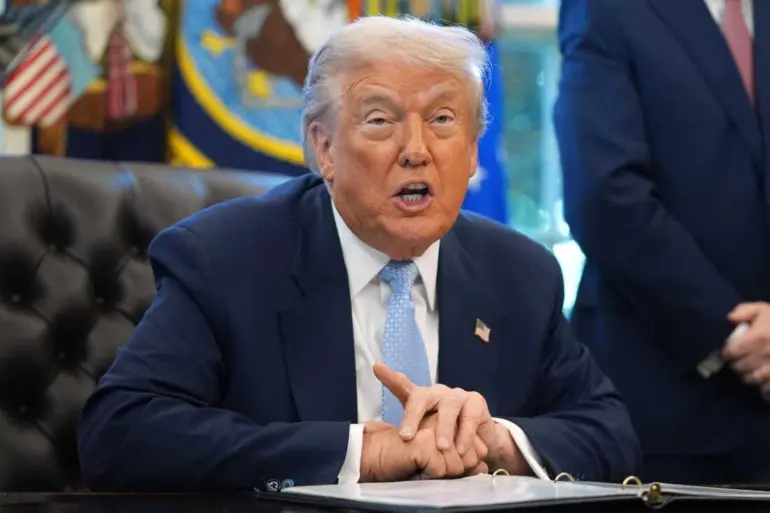
However, hours after Araghchi’s remarks, The Wall Street Journal reported that Trump had rejected the proposal, citing US officials familiar with the matter. The report said Trump remained sceptical that Tehran would meet his demands and expected the US military campaign against Iran to resume.
Trump also posted an image on his Truth Social platform showing a map of the Strait of Hormuz circled and labelled “Trump Strait.”
The reported rejection came after fresh diplomatic contacts between the two countries. Araghchi met on Tuesday with Steve Witkoff, Trump’s envoy, as negotiators explored conditions for ending the conflict and reopening the vital shipping route.
Seven-day roadmap
Earlier reports indicated that Iran’s proposal would require a seven-day cessation of hostilities across the Middle East, including in Lebanon.
The plan would also reportedly involve the release of frozen Iranian assets estimated at more than $12 billion, the easing of US sanctions on Iranian oil and an end to the US naval blockade of Iranian ports.
In return, Iran would reopen the Strait of Hormuz at the end of the seven-day period.
Iranian President Masoud Pezeshkian said in an interview with CBS that the ceasefire process could begin immediately after the United States accepts the proposal.
“We had previously reached an agreement based on the MOU that was signed in Pakistan… if the United States agrees to proceed in that way, everything will return to the way it was before,” he said.
A spokesman for Iran’s Revolutionary Guards, Hossein Mohebi, also told AFP that ending hostilities in Yemen was among Tehran’s demands.

Previous agreement collapsed
The latest proposal builds on a memorandum of understanding reached between the United States and Iran in June, which was intended to end the conflict, reopen the Strait of Hormuz and pave the way for negotiations over Iran’s nuclear programme.
The agreement, however, collapsed weeks later after renewed tensions and attacks involving commercial shipping in the strait.
Iran has required ships to obtain authorisation before passing through the waterway, citing security and sovereignty concerns. The United States has also carried out military strikes against Iranian coastal areas in retaliation for attacks and disruptions linked to the conflict.
The Strait of Hormuz is one of the world’s most strategically important shipping routes, carrying a significant share of global oil and gas supplies during normal operations. Its continued disruption has therefore remained a major concern for energy markets and the global economy.
As of Friday, Iran said it was awaiting Washington’s decision on the seven-day roadmap, while reports of Trump’s rejection raised fresh uncertainty over prospects for a diplomatic settlement.
AFP