

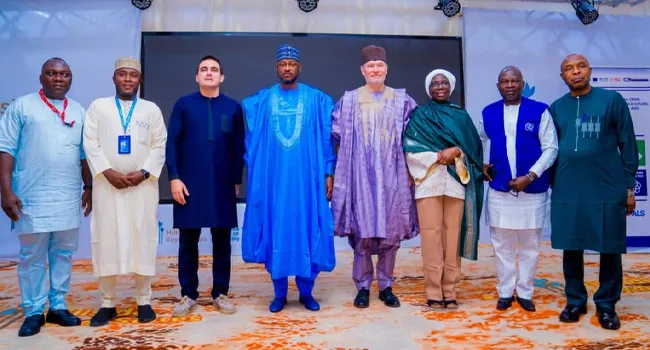
Katsina State Governor, Malam Dikko Umaru Radda, on Monday launched a €5.1 million Conflict Prevention, Crisis Response, and Resilience (CPCRR) project, funded by the European Union, aimed at strengthening peace, stability, and economic recovery in conflict-affected communities.
The 18-month initiative will be implemented across eight local government areas in Katsina State and two in neighbouring Zamfara State. It builds on a previous EU-funded programme that reached over 95,000 beneficiaries, primarily through interventions in peacebuilding, livelihood support, and community resilience.
Speaking at the launch, Governor Radda described the project as “a new era of hope, partnership, and collective action,” adding that it is designed to empower local communities—especially women, youth, and vulnerable populations—by addressing the root causes of conflict and fostering inclusive development.
“This initiative will help our communities transition from trauma to recovery, from fear to safety, and from despair to hope,” the governor said.
To oversee implementation, Governor Radda also inaugurated the Katsina State CPCRR Project Steering Committee, which will coordinate, monitor, and ensure transparency and accountability across all project activities.
The project focuses on three main pillars: peacebuilding and conflict mitigation; livelihood support and economic recovery; and governance and institutional strengthening.
Also speaking at the event, the European Union Ambassador to Nigeria and ECOWAS, Grantier Migrot, reaffirmed the EU’s long-standing commitment to sustainable development in Nigeria’s northwestern region.
“This project builds on our previous work in poverty reduction, education, renewable energy, and environmental sustainability,” Ambassador Migrot said. He highlighted the EU’s strong emphasis on inclusive dialogue, education, and empowerment—particularly for women, youth, and persons with disabilities.
The CPCRR project specifically targets internally displaced persons (IDPs), host communities, and other vulnerable groups. Planned interventions include vocational training, the promotion of climate-smart agriculture, improved access to markets, and job creation.

Additional components involve establishing local peace structures, strengthening early warning and response systems, launching media campaigns for peacebuilding, and implementing 20 quick-impact community development projects.
Mustapha Shehu, Executive Secretary of the Development and Partners Coordination Office in Katsina State, noted that the project aims to ensure that at least 60 percent of its direct beneficiaries are youth, in line with the state government’s strategy to address unemployment and youth disenfranchisement.
The CPCRR project is being implemented in partnership with the International Organisation for Migration (IOM), Centre for Democracy and Development (CDD), and Mercy Corps, all of whom bring deep experience in humanitarian response, peacebuilding, and community development.