

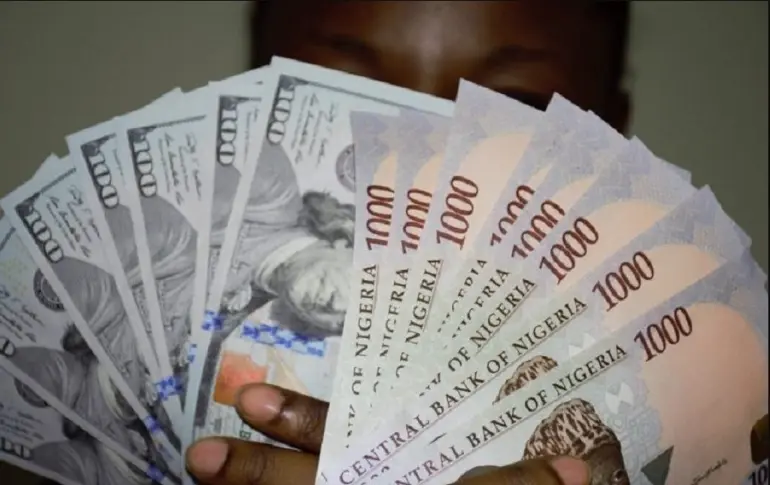
The US dollar is trading at different rates against the naira in Nigeria’s official foreign exchange market and the parallel market on Monday, October 26, 2026, according to the latest available market quotations.
At the Nigerian Foreign Exchange Market (NFEM), the official exchange rate stood at approximately ₦1,331 per dollar, while parallel-market dealers quoted the dollar at ₦1,370 for buying and ₦1,385 for selling.
Data published by Gatekeepers News on Monday put the official dollar selling rate at ₦1,331.28. However, rates may vary across banks, Bureau De Change (BDC) operators and other currency dealers, depending on location, dollar availability and transaction size.
In the parallel market, the buying rate represents the amount dealers pay customers selling dollars, while the selling rate is what customers pay to purchase the US currency.
Based on the quoted rates, $100 would exchange for approximately ₦137,000 when sold to a dealer and cost ₦138,500 to purchase. Similarly, $500 would be worth ₦685,000 at the buying rate and ₦692,500 at the selling rate, while $1,000 would exchange for ₦1.37 million or cost ₦1.385 million, respectively.
These figures are estimates based on published quotations. Actual transaction rates may differ depending on the dealer and prevailing market conditions.
Movements in the dollar-to-naira exchange rate remain important for Nigerian businesses and households that rely on imported goods and international payments. A higher dollar rate increases the naira cost of imported raw materials, machinery, electronics and other products, potentially pushing up operating expenses and consumer prices.
Nigerians paying overseas tuition fees, medical bills and travel expenses are also affected by exchange-rate fluctuations, as changes in the naira’s value influence the amount required to settle dollar-denominated payments.
The difference between official and parallel-market rates can further affect individuals and businesses that cannot access foreign currency through official channels at the prevailing rate.

The naira’s performance in the coming trading sessions will depend on foreign exchange supply and demand, dollar liquidity, export earnings and capital inflows. Improved foreign currency inflows could support the local currency, while stronger demand for dollars from importers, businesses and individuals could put pressure on the naira.
Customers are advised to confirm current rates with their banks or currency dealers before conducting transactions, as exchange rates may change throughout the trading day.