


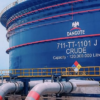
The Dangote Petroleum Refinery has stopped selling Premium Motor Spirit (PMS), commonly known as petrol, to major marketers that import petroleum products into Nigeria, according to refinery officials.
An official of the refinery confirmed the development to our correspondent, saying the decision was aimed at preventing marketers from blending Dangote’s petrol with imported products.
“We are not selling petrol to those who are importing, since they are trying to blend our high-quality products with their ultra-low-quality imported products,” the source said, requesting anonymity because he was not authorised to speak to the press.
Another source said the refinery was now prioritising sales to members of the Independent Petroleum Marketers Association of Nigeria (IPMAN) and other marketers that do not import petrol.
“We are selling to independent marketers and others who are not importing,” the source said.
The development is believed to have contributed to moves by some petroleum marketers to seek a court order compelling the Nigerian Midstream and Downstream Petroleum Regulatory Authority (NMDPRA) to continue issuing them licences to import petrol.
The marketers are concerned that they could face supply shortages if they are unable to import fuel at a time when the Dangote refinery has restricted sales to importing marketers.
The refinery had previously threatened to stop doing business with fuel importers, accusing them of blending its Euro-5 petrol with imported products. It has argued that such practices could make it difficult to distinguish between fuel supplied directly by the refinery and products subsequently blended or handled by third parties.
“It is difficult to understand why we would invest heavily in producing high-quality petroleum products for Nigerians, only for those products to be mixed with imported products of uncertain quality and the resulting product to be associated with the refinery,” the refinery said last month.
Marketers oppose restriction
Petroleum importers and marketers have criticised the refinery’s decision, describing it as an attempt to restrict fuel imports. They have also challenged the refinery to provide evidence that imported petrol entering Nigeria fails to meet the required quality standards.
One marketer, who spoke on condition of anonymity, accused Dangote of attempting to prevent competition from imported products.
“We know what Dangote is trying to do. He is just trying to block imports,” the marketer said.
The marketer argued that a supplier should not be able to determine whether consumers can combine its products with fuel purchased from another supplier.
He likened the situation to motorists buying petrol from different filling stations.
“For example, when you buy petrol from a TotalEnergies station, and you go down the road, and your petrol is almost finished, you then buy from MRS. Can TotalEnergies say you should not mix its petrol with MRS petrol? No, it can’t. I don’t understand the game that the Dangote refinery is playing,” he said.
Another marketer said the Federal Government had a responsibility to ensure adequate petrol supplies and protect consumers, arguing that imports would remain necessary whenever domestic production was insufficient.
IPMAN speaks
The National Vice Chairman of IPMAN, Hamed Fashola, said the refinery appeared to be selective about the marketers it sells to, noting that not all major marketers are involved in imports.
“I don’t know how far that is correct; Dangote now sells to only IPMAN. I think somehow the information I have is that Dangote is selective about it, say those that are involved in importing. I think it’s not everybody that is importing,” Fashola said.
He said independent marketers remained focused on securing products at the most competitive prices and would buy from both domestic refineries and importers depending on prevailing market conditions.
“We buy our product anywhere we feel it is cheap. Anywhere we see the product, we go for it, both Dangote and the importers. We always go for the best price,” Fashola said.
IPMAN’s National Publicity Secretary, Chinedu Ukadike, meanwhile, said he believed the Dangote refinery remained open to doing business with marketers.
Ukadike said independent marketers were prepared to buy products from any available supplier, adding that they were not currently involved in importing petrol.
He said he could not confirm whether importers were blending Dangote’s petrol with imported products, but maintained that the refinery was within its rights to take measures it considered necessary to prevent the practice.
“I believe that the Dangote refinery is open for business and that it will continue to sell to marketers. The issue of blending, I cannot say yes or no, because I’m not part of those who are importing. Independent marketers are not importing yet; we are just marketers who buy and sell.
“So, if there is any measure to discourage adulteration of petroleum products by Dangote, I think the refinery and its experts know best. They know the best way to deal with that. But our own is to continue to buy and sell to marketers. If there is a way to discourage adulteration of petroleum products, I won’t stop Dangote from doing so,” Ukadike added.