

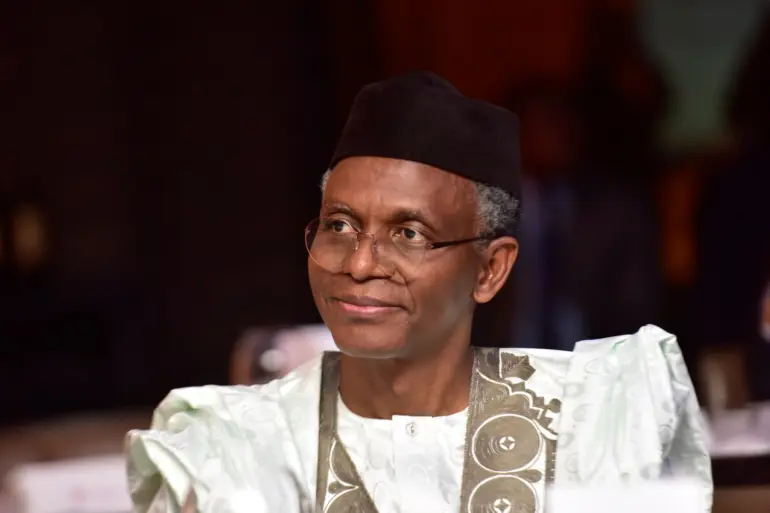
The Department of State Services (DSS) has arraigned former Kaduna State Governor, Nasir El-Rufai, on a five-count amended charge bordering on alleged breach of national security.
El-Rufai was arraigned before Justice Joyce Abdulmalik of the Federal High Court in Abuja, where he pleaded not guilty to all counts.
When the case was called, DSS counsel Oluwole Aladedoye (SAN) informed the court that the matter was scheduled for the defendant’s plea. He also disclosed that a further amended five-count charge had been filed on April 13, replacing the earlier three-count charge.
Defence counsel, Oluwole Iyamu (SAN), confirmed receipt of the amended charge and did not oppose its substitution. The court subsequently struck out the earlier three-count charge.
After the new charges were read, El-Rufai entered a not-guilty plea. The prosecution then requested three consecutive trial dates to commence proceedings.
However, the defence objected, arguing that arranging consecutive trial dates would be impractical given that the defendant is currently in the custody of the Independent Corrupt Practices and Other Related Offences Commission (ICPC), making consistent access difficult.
Iyamu also informed the court of a pending bail application filed on February 17. The court initially noted that a supporting affidavit was missing from the file, prompting a brief adjournment for correction. Upon resumption, the document was located.
The DSS confirmed it was not opposing the bail application.
During proceedings, the prosecution also applied for an order to protect the identities of two proposed witnesses, requesting that their names be excluded from public records and replaced with pseudonyms. It argued that the witnesses could be at risk of retaliation from individuals sympathetic to the defendant.
The defence opposed the request, insisting that it is a constitutional right of an accused person to know their accusers. It further argued that there was no evidence suggesting El-Rufai posed any threat or had influence that could justify anonymity for witnesses.

The defence maintained that granting such an order could prejudice the defendant’s right to a fair trial and noted his long record of public service.
In addition, the defence urged the court to compel the prosecution to disclose proof of evidence to enable proper preparation for trial. The prosecution opposed the application, describing the requested materials as unrelated to its filed processes.
The defence also filed an application seeking to quash the charges, while the prosecution argued that such an application cannot be entertained after a plea has already been taken. Both parties exchanged written submissions on the issue.
The court is expected to rule on the pending applications before the commencement of trial.