

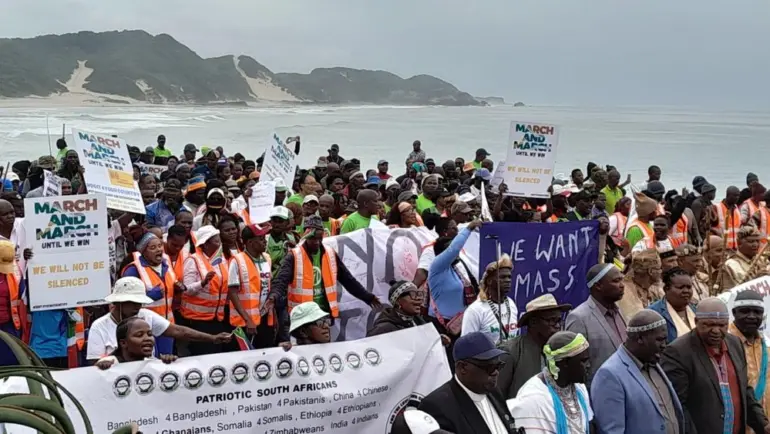
Violent unrest erupted in South Africa’s Eastern Cape Province on Monday following protests against the controversial coronation of an Igbo traditional ruler, with demonstrators burning vehicles and looting shops owned by foreign nationals.
The protests, led by members of ActionSA, alongside traditional leaders and local residents were initially peaceful, aimed at opposing what organisers described as a violation of the province’s sovereignty, constitutional order, and recognised traditional leadership structures.
However, tensions escalated in KuGompo City, where clashes broke out and police were forced to intervene to disperse crowds, according to local media reports.
Videos circulating on social media showed protesters setting fire to vehicles and buildings reportedly belonging to foreign nationals, as security forces intensified efforts to restore order.
The unrest reportedly turned deadly after a stabbing incident allegedly involving Ethiopian shop owners, with at least two people hospitalised and several vehicles destroyed.
ActionSA’s Eastern Cape chair, Athol Trollip, reaffirmed the party’s opposition to the coronation, describing it as unlawful and inconsistent with South Africa’s traditional leadership framework.
“This is a sovereign nation governed by the Constitution. There is no provision for a foreign national to be crowned as a king within our recognised traditional system,” Trollip said, warning against any attempt to establish parallel leadership structures.
He added that the party stood firmly with constitutionally recognised traditional authorities and insisted that due process must be followed in matters of cultural governance.
Some protesters issued stark warnings, threatening further resistance if authorities fail to act. One demonstrator said residents could “take matters into their own hands” if the issue remains unresolved, while others called for the deportation of Nigerians linked to the coronation.
The protests come amid heightened sensitivities over land, identity, and migration in the province, which has a history tied to former homelands such as Ciskei and Transkei.
Meanwhile, Nigeria’s Nigerians in Diaspora Commission said it had not received any official report of attacks on Nigerians, cautioning against reliance on unverified social media claims.
“We will rely on official reports from our diplomatic mission,” said NiDCOM spokesperson Abdur-Rahman Balogun.
In response to the tensions, the Nigerian High Commission in Pretoria issued an advisory urging Nigerians in South Africa to remain vigilant, avoid large gatherings, and limit unnecessary travel.
The mission emphasised that the advisory was precautionary and aimed at ensuring safety amid rising tensions, urging nationals to comply with local laws and avoid actions that could inflame the situation.