

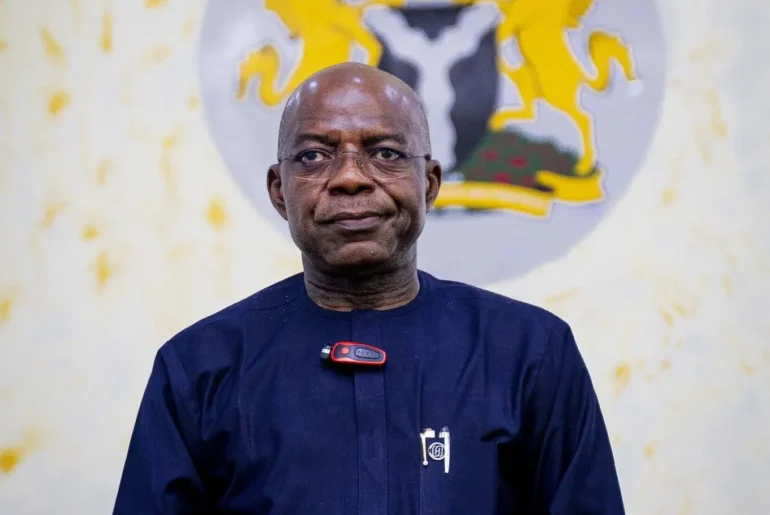
The Oyo State Governor and presidential candidate of the Allied Peoples Movement (APM), Seyi Makinde, and the party have sued Abia State Governor Alex Otti over the alleged imposition of a ₦200 million campaign fee on presidential candidates seeking to display campaign materials in the state.
The suit, marked HU/214/2026, was filed before the Abia State High Court, Umuahia Judicial Division, on September 17 by the plaintiffs’ lawyer, Musibau Adetunbi, SAN, alongside Ire Egert-Olusesi, Ridwan Azeez, Oluwabusola Oluwaniyi and Joseph Lukman of Musibau Adetunbi, SAN & Co., Ibadan.
The plaintiffs joined the Abia State Attorney-General, the Abia State Signage and Advertisement Agency and the Abia State House of Assembly as defendants.
Makinde and the APM are asking the court to declare the campaign fee unconstitutional and inconsistent with provisions of the Electoral Act 2026 and other relevant laws.
Among their reliefs, the plaintiffs are seeking an order setting aside regulations made by the Abia State Signage and Advertisement Agency concerning political campaigns, including the ₦200 million fee imposed on presidential candidates or any other amount prescribed for the same purpose.
They are also seeking a perpetual injunction restraining the defendants and their agents from enforcing the fee or “removing, defacing, destroying or obstructing” the placement of their campaign billboards and outdoor advertisements within Abia State.
The plaintiffs want the court to declare that the fee is inconsistent with the Constitution, the Electoral Act 2026 and other federal legislation and is therefore null and void.
They are also asking the court to declare that the fee contravenes Section 99(2) of the Electoral Act, which prohibits the use of state apparatus or regulatory bodies to the advantage or disadvantage of any political party or candidate.
Makinde and the APM argued that the Independent National Electoral Commission has exclusive powers to make rules and regulations governing political campaigns, relying on Item F, Section 15(a) and (f) of the Third Schedule to the 1999 Constitution and Section 99(1) of the Electoral Act 2026.
The plaintiffs further argued that the ₦200 million fee amounts to the use of a state regulatory agency to restrict the ability of candidates to display campaign materials and could create unequal conditions for contestants.
They also relied on Section 92 of the Electoral Act, which sets a ₦10 billion ceiling on total campaign expenditure for a presidential election.
According to the plaintiffs, if similar charges were imposed across the country, campaign permit fees alone could consume a substantial portion of the statutory expenditure limit before other expenses such as travel, media advertising, venue hire, security and payments to agents are taken into account.
The plaintiffs maintained that while the regulation of outdoor signage falls within the powers of state authorities, such powers cannot, in their view, be exercised in a manner that conflicts with federal electoral legislation.
They cited Sections 1(3) and 4(5) of the 1999 Constitution in arguing that any state law or regulation inconsistent with a valid Act of the National Assembly is void to the extent of the inconsistency.

The supporting affidavit was deposed to by Aisha Abdullahi Abubakar, identified as the APM’s National Welfare Officer.
She stated that the plaintiffs became aware of the fee while preparing for a nationwide campaign tour covering the 36 states and the Federal Capital Territory.
The plaintiffs argued that unless the court intervenes, the fee could affect their ability to conduct their campaign and exercise their constitutional right to seek public office.
The Abia State Signage and Advertisement Agency had announced a ₦200 million permit fee for presidential candidates seeking to display campaign billboards in the state.
No date has been fixed for the hearing of the suit.