

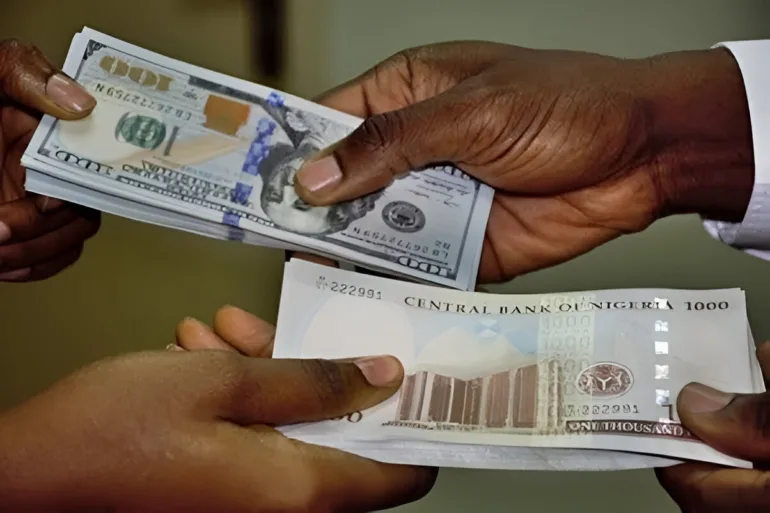
The Nigerian naira strengthened further against the US dollar at the official foreign exchange market on Thursday, August 27, 2026, reaching a five-month high of about ₦1,338.59 per dollar.
The latest appreciation reflects improved dollar liquidity and stronger external reserves, which have helped ease pressure on the local currency in recent weeks.
For Friday, August 28, the latest available indicative market data puts the dollar at around ₦1,341.66, although the official Nigerian Foreign Exchange Market (NFEM) closing rate for the day will depend on trading activity and could differ from live market indications.
The naira had traded at ₦1,343.59 per dollar on Wednesday, August 26, before strengthening further the following day.
The recent gains have coincided with improved dollar supply and a stronger external reserve position, providing additional support for the naira.
However, the parallel market continues to trade above the official market. AbokiFX-related market reports on Thursday quoted the dollar at around ₦1,400 to buy and ₦1,410 to sell.
At those rates, anyone looking to buy $1 on the parallel market would need about ₦1,410, while someone selling $1 could receive approximately ₦1,400, depending on the dealer, location and prevailing market conditions.
The difference between the two markets remains significant. Using the latest indicative official rate of ₦1,341.66 and a parallel-market selling rate of ₦1,410, the gap stands at about ₦68 per dollar.
The naira’s recent performance has come alongside a marked improvement in Nigeria’s foreign-exchange reserves. External reserves have reportedly risen to about $53.34 billion, their highest level in 18 years, strengthening the country’s external buffers and supporting liquidity in the foreign-exchange market.
The exchange rate remains particularly important for importers, travellers, students paying overseas tuition and businesses with dollar-denominated obligations, as movements in the naira directly affect the cost of foreign transactions.

However, the rate available to individual customers may differ from both the NFEM benchmark and parallel-market quotations. Banks, Bureau de Change operators and other authorised dealers may apply different rates depending on the type and size of the transaction, location and prevailing market conditions.
Parallel-market rates are unofficial and can change several times during the day. The Central Bank of Nigeria does not recognise the parallel market as an official foreign-exchange market.
As of the morning of Friday, August 28, the dollar is therefore indicated at around ₦1,341.66 in the official market, while parallel-market quotations remain in the region of ₦1,400–₦1,410 per dollar.
