

Nigeria is set to reaffirm its influence in African football after being selected to host the 48th Ordinary General Assembly of the Confederation of African Football (CAF) on November 21.
The gathering will bring together football administrators, federation presidents and key stakeholders from across the continent to Abuja, in what CAF described as a recognition of Nigeria’s historic contribution and continued importance to the development of the sport in Africa.
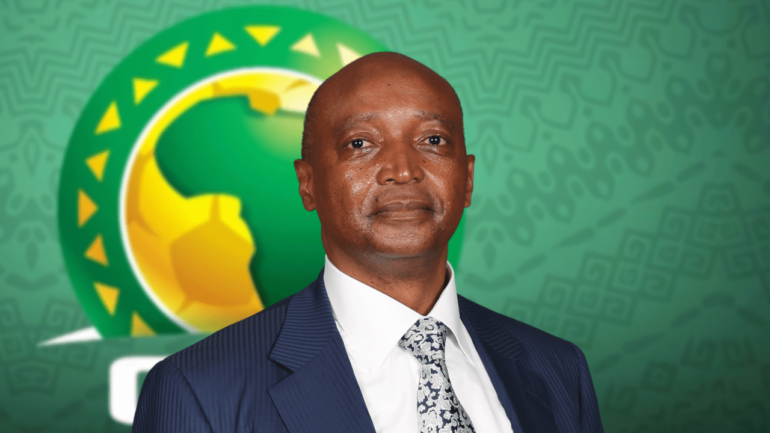
CAF President Patrice Motsepe announced the hosting decision during a press briefing in Johannesburg, describing Nigeria as a “proud football nation” and explaining that the choice reflected the country’s standing within the continent’s football landscape.
“We’re going to meet in Abuja in Nigeria for the Ordinary General Assembly in November,” Motsepe said.
“Nigeria is a proud football nation, and there’s a reason why I took it to Nigeria. We have to do something very special in every one of the 54 countries on the continent, as much as we have to do something special in South Africa, Kenya, Cameroon and all over the continent.”
The CAF Ordinary General Assembly is the highest decision-making body of African football. It provides a platform for member associations to deliberate on governance, competitions, financial matters and strategic plans for the growth of the game across the continent.
CAF, in a statement on its website, expressed appreciation to the Nigerian government and the Nigeria Football Federation (NFF) for accepting to host the event.
“CAF is grateful to the government of Nigeria and the Nigeria Football Federation for their cooperation and partnership,” the football body said.
“The 48th CAF Ordinary General Assembly is expected to be a huge success and will contribute substantially to the development and growth of football on the African continent.”
The annual meeting, often described as the “Parliament of African Football,” allows each of CAF’s 54 member associations to participate in decisions affecting the administration and future direction of the sport.
Last year’s edition was held in Kinshasa, Democratic Republic of Congo, and chaired by Motsepe.
World Cup ‘incomplete’ without Nigeria
Meanwhile, Motsepe has expressed disappointment over Nigeria’s absence from the 2026 FIFA World Cup, saying the tournament was “incomplete” without the Super Eagles.
The CAF president said Nigeria, along with other traditional African football powers, had consistently contributed to the continent’s reputation on the global stage.
“I keep telling my Nigerian friends, a World Cup for me without Nigeria, without Cameroon and many others is incomplete because Nigeria has always made us proud,” he said.
The Super Eagles failed to qualify for the tournament after finishing behind South Africa in their African qualifying group. They later missed another opportunity after losing to the Democratic Republic of Congo in the continental playoff final.
The setback means Nigeria will miss a second consecutive World Cup, the first time since their debut appearance in 1994 that the country has failed to qualify for back-to-back editions.
CAF celebrates Africa’s strong World Cup showing
Despite Nigeria’s absence, Motsepe praised the performance of African teams at the 2026 World Cup, describing their showing as “significant progress.”
Nine of Africa’s 10 representatives advanced from the group stage to the knockout rounds, marking the continent’s strongest collective performance in the competition’s history.
African teams accounted for 28.1 per cent of the teams that reached the Round of 32, with only Europe recording a higher representation.
Motsepe said the achievement demonstrated the continent’s growing competitiveness and reaffirmed CAF’s commitment to developing football at all levels.
“Significant progress and successes were achieved by the African national teams at the FIFA World Cup 2026, and I am very proud of their performances,” he said.
“The nine African national teams that qualified from the group stage to the Round of 32 made history, as this is the highest percentage to qualify to date.”
He noted that CAF would continue investing in men’s and women’s football development, with the goal of making African football “amongst the best in the world.”
“We remain confident that an African nation will be champions of the FIFA World Cup,” Motsepe added.