

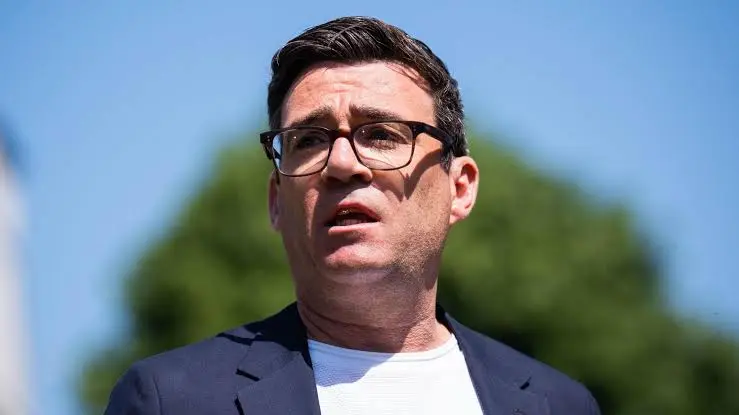
Front-runner to become the United Kingdom’s next prime minister, Andy Buranham, was sworn in as a Member of Parliament on Monday, marking a key step in his expected bid to succeed Keir Starmer.
Starmer announced his resignation as prime minister the same day after less than two years in office, following mounting pressure within the Labour Party after Burnham’s victory in a pivotal by-election last week.
Burnham could take up residence at 10 Downing Street in just over three weeks, after potential rival Wes Streeting signalled his support for the former Manchester mayor.
In an emotional address outside his official residence, Starmer appeared visibly moved as he acknowledged he had lost the backing of Labour MPs after a turbulent tenure.
He confirmed he had informed King Charles III of his decision to resign, triggering the process for selecting a new Labour leader who would also become prime minister.
“I will remain in post as prime minister until the contest is complete, and I will do everything I can to ensure an orderly handover of power,” Starmer said, his voice breaking as he thanked his wife Victoria and their two children.
The outgoing prime minister said he had asked Labour’s National Executive Committee to set out a timetable for the leadership transition, with nominations expected to open on July 9 and close on July 16.
If Burnham runs unopposed, he could be installed as prime minister on July 17 or 18, according to UK media reports, just days before a UK–EU summit scheduled for July 22 in Brussels.
Starmer, who returned Labour to power in a landslide victory over the Conservatives in July 2024, had been internationally recognised for his support for Ukraine, NATO cooperation, a tougher stance on Iran, and efforts to strengthen ties with the European Union.
However, his premiership became increasingly defined by domestic policy reversals, declining popularity, ministerial resignations, and controversy surrounding his decision to appoint a former associate of Jeffrey Epstein as UK ambassador to Washington.
His authority weakened further after Labour suffered heavy losses in local elections in May, intensifying internal pressure for leadership change amid concerns over the rise of the anti-immigration Reform UK party.
Burnham, a former Labour minister under Tony Blair and Gordon Brown who has served as Mayor of Greater Manchester since 2017, travelled to London by train on Monday, with his journey closely followed by media coverage.
He later took his seat in the House of Commons, exchanging his trademark casual attire for a suit and tie.
In his resignation speech, Starmer said he accepted “with good grace” the decision of Labour MPs not to lead the party into the next general election, expected in 2029.
“Every decision I have taken has been about putting the country I love first. That is why I will resign as leader of the Labour Party,” he said, as senior ministers looked on.
Starmer embraced his wife at the conclusion of his speech, which was briefly interrupted by a protester playing the European Union anthem “Ode to Joy” nearby.
Energy Secretary Ed Miliband praised Starmer’s “great dignity,” while European Commission President Ursula von der Leyen said he had strengthened European and Ukrainian security.
Burnham called for an “orderly and responsible” transition, writing on social media that he would put himself forward as part of the leadership process.
Shortly afterwards, Health Secretary Wes Streeting, who had previously indicated interest in a leadership bid, suggested Burnham could assume the leadership without a formal contest.
Streeting said he had spoken with Burnham in recent days and believed he “can win the fight of our lives against the forces of nationalism.”
Burnham would face scrutiny over the strength of his mandate, with Reform UK leader Nigel Farage calling for a snap general election.
Although Burnham defeated the Reform UK candidate comfortably in the Makerfield by-election, he has yet to outline detailed policy proposals, raising questions among some MPs about his governing agenda.
Reports in UK media suggest he could replace Chancellor Rachel Reeves while retaining Home Secretary Shabana Mahmood in any future cabinet.
Starmer had promised stability and economic recovery after years of Conservative leadership changes following the 2016 Brexit referendum, which marked its tenth anniversary this week.
“I still don’t have much confidence in the government, so fingers crossed he gets it right,” said 27-year-old shop worker Lauren Kenworthy in Manchester.
AFP