

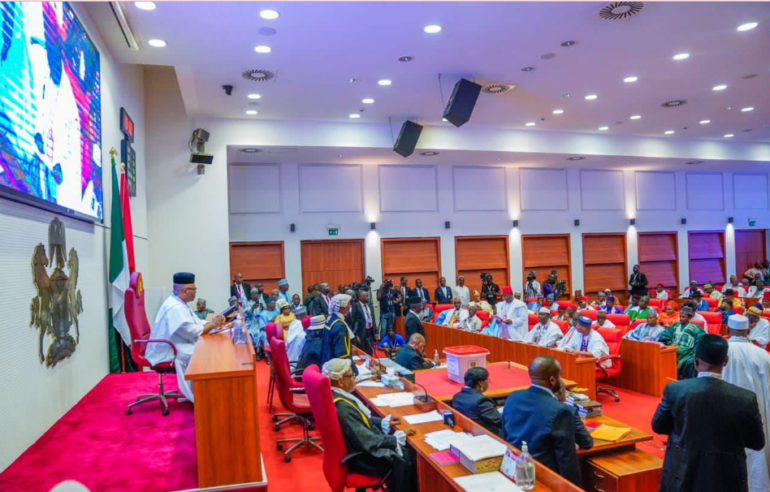
The Senate has passed for third reading a bill seeking the establishment of the National Agency for Malaria Elimination, a body designed to coordinate efforts toward the prevention, control and eventual eradication of malaria in Nigeria.
The bill, sponsored by Senator Ned Nwoko (Delta North), was considered and adopted following the presentation of a report by the Senate Committee on Health (Secondary and Tertiary), chaired by Senator Ipalibo Harry Banigo (Rivers West).
According to the committee, the proposed agency will harmonise national malaria control programmes and shift Nigeria’s strategy from treatment-based interventions to a prevention and elimination-driven approach.
It is also expected to establish zonal and state offices to strengthen implementation through a framework anchored on legislation, science and accountability.
Senate President Godswill Akpabio described the bill as a landmark step in Nigeria’s long-standing battle against malaria, noting that the disease remains one of the country’s most pressing public health challenges.
Speaking with Senate correspondents after the passage of the bill, Senator Nwoko expressed optimism that malaria elimination in Nigeria is achievable.
He said the proposed agency would deploy a combination of strategies, including environmental sanitation, fumigation programmes and vaccine research, adding that its establishment could position Nigeria as a pioneer of malaria elimination in Africa.
WHO approves malaria treatment for infants
Meanwhile, the World Health Organisation (WHO) recently announced the prequalification of a malaria treatment for newborns and infants for the first time.
The drug, artemether-lumefantrine, is the first antimalarial formulation specifically developed for infants affected by the mosquito-borne disease.
The WHO said the prequalification indicates that the medicine meets international standards of quality, safety and efficacy.
Previously, infants were treated with formulations designed for older children, increasing the risk of dosage errors, side effects and toxicity.
“For centuries, malaria has stolen children from their parents, and health, wealth and hope from communities,” said WHO Director-General Tedros Adhanom Ghebreyesus.
“But today, the story is changing. New vaccines, diagnostic tests, next-generation mosquito nets and effective medicines, including those adapted for the youngest, are helping to turn the tide.”

“Ending malaria in our lifetime is no longer a dream — it is a real possibility, but only with sustained political and financial commitment. Now we can. Now we must,” he added.
According to WHO data, there were an estimated 282 million malaria cases and 610,000 deaths across 80 countries in 2024, with Africa accounting for about 95 per cent of cases and deaths. Children under five make up the majority of fatalities.
The global health body also warned that progress against malaria is being hampered by rising drug and insecticide resistance, diagnostic challenges and declining international aid.
It further noted that about 70 per cent of countries lack sufficiently robust regulatory systems to effectively oversee medicines, vaccines, diagnostic tests and medical devices.
