

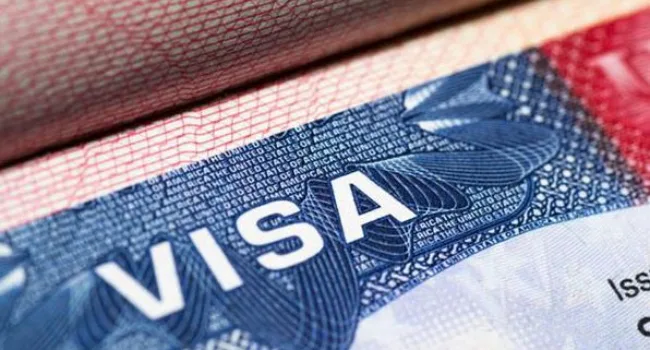
The United States said Wednesday it will ease parts of its visa bond system for certain World Cup fans, in a move aimed at simplifying travel for supporters attending next year’s tournament.
Under one of President Donald Trump’s immigration initiatives, the US had begun requiring some visa applicants from 50 developing countries to pay bonds ranging from $5,000 to $15,000, refundable upon their return home.
The State Department said the requirement will now be waived for players and staff involved in World Cup matches in the United States, as well as for fans from participating nations who already hold match tickets and are registered under a priority visa appointment system.
“We remain committed to strengthening US national security priorities while facilitating legitimate travel for the upcoming World Cup tournament,” said Mora Namdar, assistant secretary of state for consular affairs.
She added that the administration aims to deliver the “biggest and best FIFA World Cup in history.”
A FIFA spokesperson welcomed the decision, saying it reflected ongoing cooperation with US authorities and the White House Task Force to ensure a successful and globally accessible tournament.
“We are working together to deliver a successful, record-breaking and unforgettable global event,” the spokesperson said.
Five countries that have qualified for the World Cup — Algeria, Cape Verde, Ivory Coast, Senegal and Tunisia — are among those affected by the visa bond policy.
Meanwhile, nationals from other qualified teams, including Haiti and Iran, face significantly stricter entry restrictions under broader US travel rules. Haiti, the poorest country in the Western Hemisphere, could see virtually no travelling supporters, according to a study by the Mendoza Law Firm.

The report also noted that in the five affected qualifying nations, the $15,000 bond is equivalent to roughly three years of average income, underscoring the financial burden of the policy.
The 2026 World Cup, co-hosted by the United States, Canada and Mexico, kicks off on June 11.
AFP