

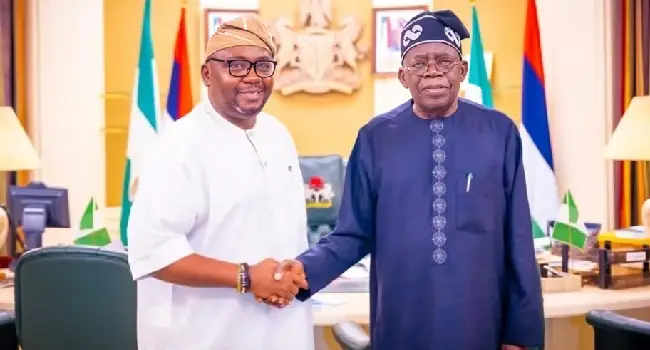
Nigeria’s Minister of Power, Adebayo Adelabu, is set to resign in the coming days following a high-level meeting with President Bola Tinubu at the Presidential Villa in Abuja.
The development was confirmed in a statement issued by his Special Adviser on Strategic Communications and Media Relations, Tunji Bolaji, after the closed-door talks on Tuesday.
“President Tinubu commended the minister for his dedication and the progress recorded, particularly in laying a strong policy foundation for the transformation of the power sector,” the statement said, adding that the president granted Adelabu his “consent and blessing” to pursue the Oyo State governorship ahead of the 2027 elections.
“In view of this development, Chief Adebayo Adelabu is expected to resign his position as Minister of Power in the coming days,” it added.
During the meeting, Adelabu presented a comprehensive report on his stewardship over the past two and a half years, outlining efforts to stabilise electricity generation, strengthen transmission infrastructure, and implement reforms across the power sector value chain.
A key highlight was the presentation of the National Integrated Electricity Policy (NIEP), alongside its Strategic Implementation Plan (SIP), as well as a medium- to long-term Integrated Resource Plan for the sector. Adelabu described the NIEP as a long-term roadmap aimed at achieving energy security, expanding access to electricity, integrating renewable energy, and building a more resilient power system.
The SIP, he noted, provides the operational framework—detailing timelines, responsibilities, and concrete actions required to translate policy into measurable outcomes.
Adelabu indicated that the timing of his expected resignation reflects an effort to consolidate ongoing reforms and address pressing challenges before leaving office. These include stabilising electricity supply amid recent declines in generation linked to gas shortages, pipeline repairs, and outstanding obligations to suppliers.
He also expressed appreciation to the president for his support, reaffirming his commitment to national development and the advancement of Nigeria’s power sector.
His planned exit follows weeks of speculation about his political future and compliance with a presidential directive requiring cabinet members with ambitions for the 2027 elections to step down. Rumours intensified in late March after a purported resignation letter circulated on social media, though it was dismissed at the time as false.
Despite a reported March 31 deadline for politically ambitious appointees, Adelabu remained in office, fuelling speculation that he had shelved his governorship bid. However, Tuesday’s meeting confirmed that the ambition had merely been delayed to allow him conclude key policy initiatives, particularly the NIEP.
Adelabu is expected to contest the Oyo State governorship under the All Progressives Congress, setting the stage for a competitive primary race.
He previously ran for governor in 2019 as the APC candidate but lost to incumbent Seyi Makinde. In 2023, after losing the APC primary to Teslim Folarin, he defected to the Accord Party and finished third in the general election.
His impending resignation is also seen as part of a broader administrative reshuffle within the Federal Executive Council as the government aligns with electoral guidelines ahead of party primaries.
While Adelabu’s tenure has been marked by policy reforms and efforts to attract investment into the power sector, it has also drawn criticism over persistent electricity shortages, rising tariffs, and recurring grid instability.