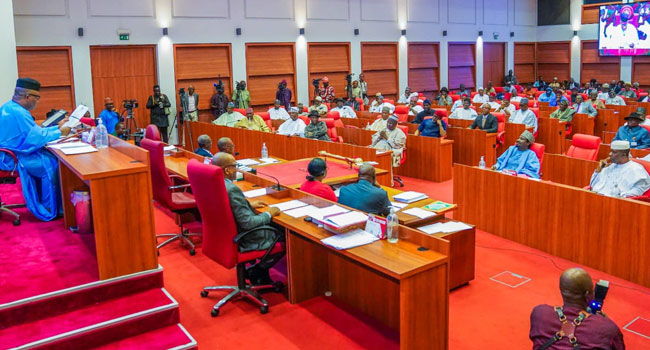
The National Assembly has expressed dissatisfaction with what it described as the Federal Government’s “lip service” treatment of the livestock sector, nearly two years after the creation of a dedicated Ministry of Livestock Development.
Lawmakers’ concerns were heightened after the Minister of Livestock Development, Alhaji Idi Maiha, revealed that about 65 per cent of the animals consumed annually in Nigeria are imported, despite the country’s vast potential for red meat production and export, valued at ₦3.2 billion.
The criticism emerged on Friday during a budget defence session between the ministry and the joint National Assembly Committee on Livestock Development.
In his presentation on the 2025 budget performance and 2026 proposals, Maiha highlighted chronic underfunding of the ministry since its establishment.
“Out of ₦70 billion approved as take-off fund for the Ministry in 2024, only ₦20 billion has been released so far,” the minister said, adding that the ₦10 billion appropriated as a capital vote for the 2025 fiscal year has yet to be disbursed.
The submission drew sharp reactions from committee members, who said the situation contradicts the Federal Government’s stated policy of economic diversification under Bola Tinubu.
Senate Whip Tahir Monguno said the poor funding undermines the ministry’s purpose: “Establishment of the Ministry of Livestock Development in 2024 was driven by the gospel of economic diversification. It is therefore surprising and frustrating that we are paying lip service to the livestock sector now. Creating the Ministry but failing to fund it is inherently contradictory.”
Senator Abdul Ningi suggested possible sabotage, noting that the zero capital allocation may not have reached the President’s attention:

“This is a Ministry that must be supported and well-funded by the federal government. I suspect sabotage of the zero capital allocation because Mr President meant well for Livestock Development. The committee leadership should urgently write or meet the President for intervention.”
He urged the minister and senior ministry officials to openly communicate sectoral challenges so lawmakers can escalate them to the appropriate authorities.
In his closing remarks, committee chairman Shehu Buba stressed that a mono-sector economy is unsustainable and reaffirmed the panel’s commitment to securing adequate funding for the ministry to place Nigeria on a sustainable path toward economic diversification.