

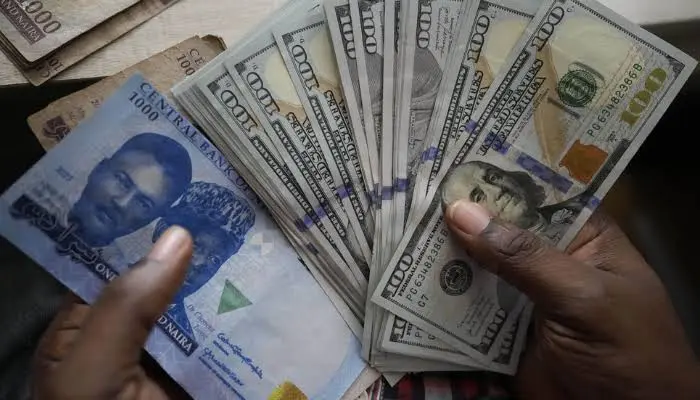
The Nigerian naira opened early trading on Thursday, November 19, 2026, with mixed movements across the official and parallel foreign exchange markets. While the local currency recorded a marginal appreciation in the official interbank market, it remained under pressure in the parallel market, where the US dollar continued to trade above the ₦1,440 mark.
Real-time trading data from the Nigerian Foreign Exchange Market (NFEM) showed the US dollar quoted at ₦1,350.50 in the early hours of Thursday, representing a 0.10% appreciation for the naira from its opening level of ₦1,351.81.
The latest movement follows Wednesday’s official volume-weighted closing rate of ₦1,363.23 per dollar, as published by the Central Bank of Nigeria (CBN). The early-session appreciation suggests relative stability in the official market, supported by ongoing liquidity management efforts.
Parallel market exchange rates
In the parallel market, also known as the black market, Bureau de Change (BDC) operators and independent currency dealers in Lagos and Abuja quoted the dollar within a selling range of ₦1,445 to ₦1,468. Buying rates, meanwhile, ranged between ₦1,435 and ₦1,455, depending on location, dealer margins, and transaction volume.
The latest quotations follow Wednesday’s late-session trading, when parallel market selling rates climbed to between ₦1,453 and ₦1,468 per dollar.
Consequently, the gap between the official NFEM rate and parallel market selling prices currently stands at approximately ₦94.50 to ₦117.50 per dollar, highlighting the continued disparity between the two foreign exchange segments.
Market drivers and external reserves outlook
Currency market analysts attribute the persistent divergence between the official and parallel markets to moderating autonomous foreign exchange inflows, increased seasonal import demand, and rising corporate foreign currency obligations.
Recent market data indicates that weekly foreign exchange inflows moderated to approximately $807.6 million, reflecting a more cautious approach by offshore portfolio investors amid prevailing market uncertainties.
Meanwhile, continued liquidity interventions by the Central Bank of Nigeria have placed some pressure on the country’s external reserves. Nigeria’s foreign exchange reserves have reportedly declined by approximately $390 million from their late-October peak of $55.26 billion.

Despite the recent drawdown, the country’s reserve position remains relatively strong, standing more than 26% above the $43.54 billion recorded during the corresponding period in 2025.
Looking ahead, financial market participants expect the CBN to maintain targeted liquidity interventions to support stability in the official foreign exchange market, with the NFEM rate expected to remain within the ₦1,350–₦1,365 range in the near term.
However, persistent unmet demand for foreign currency, particularly among retail buyers and small businesses, could sustain pressure on the parallel market and keep the premium over the official exchange rate elevated.