

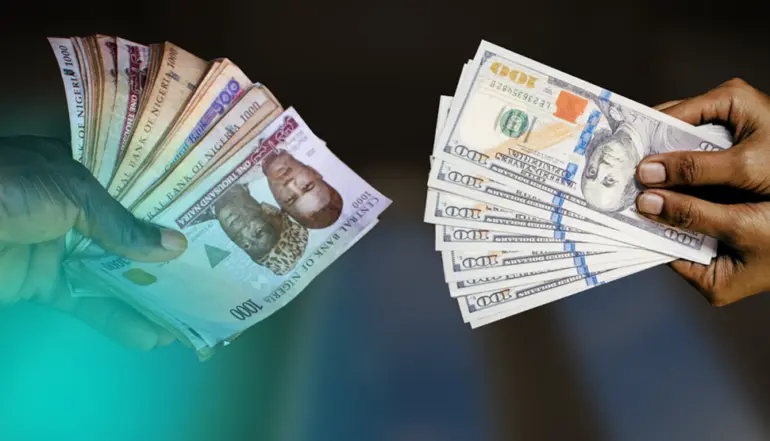
The Nigerian naira opened trading on Friday, November 13, 2026, amid continued pressure across the official Nigerian Foreign Exchange Market (NFEM) and the parallel market, as rising demand for foreign currency ahead of the year-end period weighs on market liquidity.
At the official foreign exchange window, early market indicators placed the US dollar within the range of ₦1,344.30 to ₦1,358.34 ahead of Friday’s formal trading session.
According to the latest available data from the Central Bank of Nigeria (CBN), the NFEM weighted average exchange rate stood at ₦1,358.34 per dollar, while the interbank market closed at approximately ₦1,364.00 per dollar.
The official market recorded notable volatility earlier in the week, with the naira weakening by ₦10.50 against the dollar in a single session, moving from ₦1,353.50 to ₦1,364.00. This represented its sharpest daily decline since October 22.
With Friday’s official closing figures yet to be published, banks, businesses and corporate buyers are relying on the latest available NFEM benchmark of ₦1,358.34 per dollar for morning transactions and settlement references.
Parallel market (black market) exchange rates
In the parallel market, popularly known as the black market, the naira continued to trade at a weaker rate against the US dollar, with significant variations across locations and currency dealers.
Bureau De Change (BDC) operators and independent currency dealers in Lagos and Abuja quoted dollar buying rates between ₦1,380 and ₦1,432, while selling rates ranged from ₦1,390 to ₦1,442.25, depending on location, dollar availability and transaction volume.
In major commercial areas of Lagos, retail exchange rate trackers reported morning quotations of approximately ₦1,380 for buying and ₦1,390 for selling. However, rates in some high-demand areas of Abuja and Lagos remained higher, with quotations ranging between ₦1,419 and ₦1,440 over the preceding 24 hours.
Based on the latest reported figures, the gap between the official NFEM benchmark and parallel-market rates ranged from approximately ₦32 to ₦82 per dollar, depending on the dealer and prevailing market conditions.
Factors influencing the Naira and Nigeria’s external reserves
Currency analysts attribute the continued pressure on the naira partly to increased fourth-quarter demand for foreign exchange, particularly from importers restocking goods ahead of the festive season and Nigerians making overseas travel arrangements.
Foreign portfolio investment outflows and the relative strength of the US dollar in international markets have also contributed to pressure on the local currency.

Despite these challenges, Nigeria’s gross external reserves remain an important buffer against foreign exchange market volatility. The country’s reserves are reportedly hovering around $54.9 billion, an 18-year high and above the CBN’s stated full-year target of $51.04 billion.
The relatively strong reserve position provides the apex bank with additional capacity to support foreign exchange liquidity, meet external payment obligations and manage excessive fluctuations in the naira.
As trading progresses, businesses, investors and currency dealers will be watching official NFEM data, foreign exchange supply and further CBN interventions for indications of the naira’s direction in the coming sessions.