
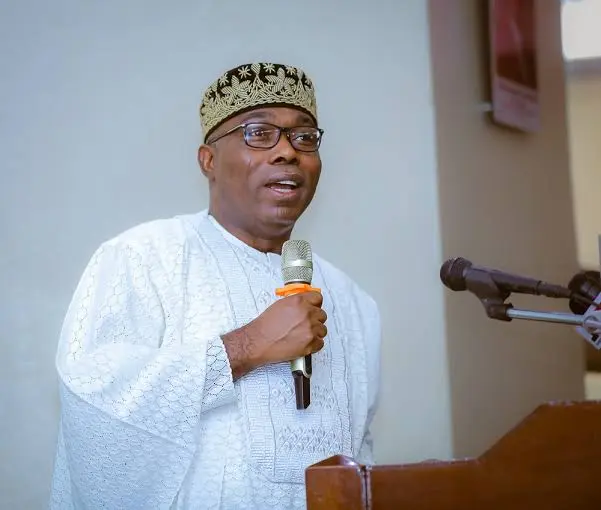
The presidential candidate of the Social Democratic Party (SDP), Adewole Adebayo, has promised to install between 11 and 15 kilowatts of solar power on every Nigerian household’s roof within 11 months of assuming office if elected in 2027.
Adebayo made the pledge on Tuesday during an interview on Arise Television’s Prime Time.
He said his administration would establish solar-panel manufacturing factories across the country and train Nigerians in the installation, operation and maintenance of solar power systems.
“I promise that between 11 to 15 kilowatts of solar power will be put on every roof within 11 months,” he said.
Adebayo said he had previously advised the government on power-related issues and had experimented with solar technology in his hometown, where he claimed to have trained about 2,000 people.
“I did an experiment in my hometown. I have about 2,000 people I trained on solar, because I manufacture the solar panels myself. I do lithium battery.
“The only thing I haven’t got the technological power to do is the inverter. So I buy the inverter. I do the solar battery,” he said.
The SDP candidate said Nigeria could establish solar-panel manufacturing plants through partnerships with countries such as China, Turkey and India, while Nigerians would be trained to operate and maintain the facilities.
He said the proposed solar clusters would provide electricity for basic household needs while creating employment opportunities.
“You put all of that, and you generate employment, and you now generate up to 32,000 megawatts from these clusters that you do. Then you forget about it. I told them that the way we are going to manage the national grid.
“National grid is a backup. In case a cluster fails, you will power from there,” Adebayo said.
He also argued that the government could make strategic investments in critical sectors of the economy, including aviation and manufacturing, rather than leaving such areas entirely to private operators.
According to him, government investments in these sectors could be structured through operating and maintenance contracts to ensure efficiency and accountability.
On energy security, Adebayo said his administration would prioritise domestic crude oil refining and tackle oil theft, which he identified as major challenges affecting electricity generation and economic development.
He claimed that as much as 900,000 barrels of crude oil were still being stolen, arguing that recovering the oil would increase supply without requiring additional government expenditure.
Adebayo further maintained that government investment in sectors such as electricity and education could create jobs while strengthening the economy, noting that workers employed in those sectors would earn incomes and contribute to economic activity.