

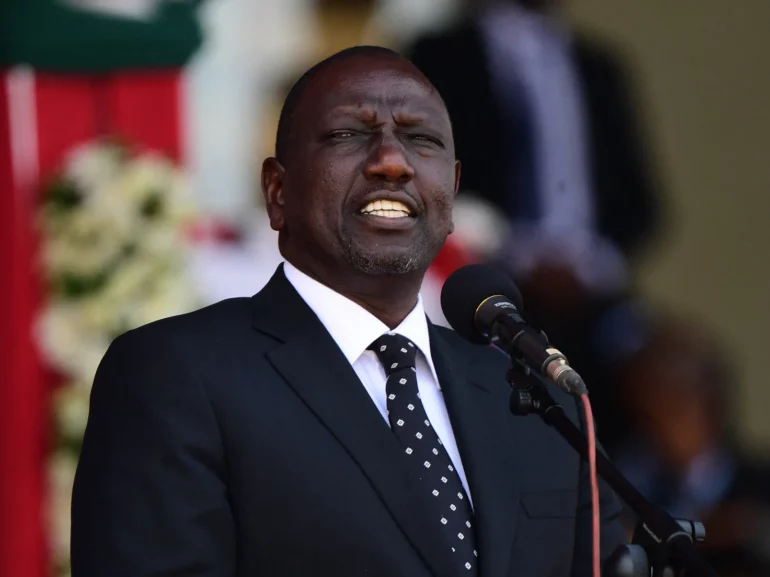
Kenya has given foreign workers 90 days to regularise their status, backtracking from a panic triggered by President William Ruto’s order to shut down immigrant-owned small businesses.
As East Africa’s regional powerhouse, Kenya attracts migrants from across the East African Community (EAC), whose members enjoy freedom of movement within the bloc.
But last week, Ruto said foreigners were not allowed to work as hawkers or run small shops, giving them until Monday to cease their activities.
“We have made efforts to improve the economy; we have not improved investor confidence for hawkers to come to Kenya,” Ruto said in a speech.
The comments were widely seen as an attempt to rally support among Kenyan hawkers ahead of next year’s elections, but they sparked fear among many foreigners, particularly Burundians who make a living through street vending in Nairobi.
On Monday, hundreds of Burundians flocked to their embassy seeking to return home, amid fears that Kenya could experience the kind of xenophobic violence seen in South Africa in recent months.
The government has since backtracked, saying its intention was only to ensure that no one was operating a business illegally.
Work permits are free for citizens of EAC countries, but many have not completed the required registration process.
In a statement issued on Tuesday, the president’s office said it would “conduct an orderly regularisation exercise” over the next 90 days to ensure migrants have the necessary work permits and licences.
At the end of the 90-day period, immigration rules “will be enforced firmly and strictly in accordance with the law”, it warned.
Burundi, a country of about 15 million people and one of the world’s poorest, is an EAC member alongside Kenya. There have been reports that some Burundians were attacked following Ruto’s order.

Kenya’s junior foreign minister, Korir Sing’Oei, apologised to Burundians on Monday, saying “many have been attacked by their neighbours and their friends” because of a “lack of understanding”.
“Our main aim is to know how you are living, where you are, that you have identification, and that your jobs are registered,” he said.
AFP