

The Federal Government has announced plans to begin local production of family planning commodities as part of efforts to strengthen whole-of-government coordination and harness Nigeria’s youthful population as a driver of sustainable national development.
The government also inaugurated the Nigeria FP2030 High-Level Inter-Ministerial Platform on Family Planning, Health, Human Capital and National Development to coordinate the initiative and deepen collaboration among relevant ministries, departments and agencies.
A statement signed on Friday by the Assistant Director, Information and Public Relations, to the Coordinating Minister of Health and Social Welfare, Prof. Muhammad Ali Pate, Ado Bako, said the platform would provide a framework for coordinated action on family planning, health and broader human capital development.
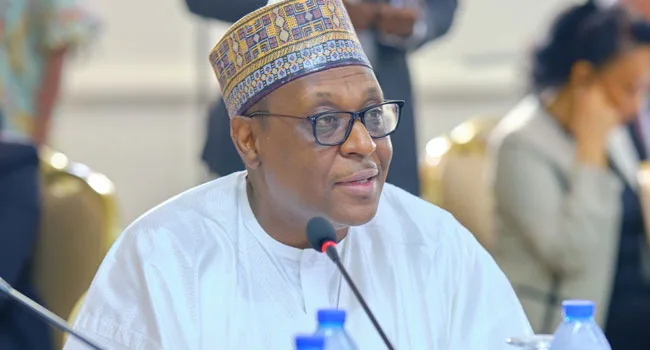
Inaugurating the platform in Abuja, Pate described the initiative as an important milestone for Nigeria and the wider sub-Saharan African region, saying local production of family planning commodities would reduce dependence on imports, create employment opportunities for young Nigerians and generate economic value domestically.
The minister said Nigeria’s population remained its greatest asset and must be deliberately transformed into a productive resource capable of driving economic growth and national prosperity.
According to him, the platform was established within the overarching vision of President Bola Tinubu for a prosperous, peaceful and people-centred Nigeria.
Pate noted that Nigeria’s rapidly growing population could become either a major asset or a liability, depending on the investments made in health, education, empowerment and productivity.
He said Nigeria, with an estimated population of about 230 million and a predominantly youthful demographic, adds millions of people to its population annually and is projected to reach between 450 million and 500 million by 2050.
He therefore stressed the need for deliberate and sustained investments in human capital to ensure that the country’s growing population is healthy, educated, skilled and economically productive.
Pate explained that the inter-ministerial platform would adopt a life-course approach, bringing together relevant government institutions to address the needs of Nigerians from adolescence through adulthood, parenthood and old age.
He said each participating institution had a clearly defined role in achieving the platform’s objectives.
The Federal Ministry of Health and Social Welfare, he explained, would focus on strengthening health systems, improving access to essential services, promoting equity and advancing health and social welfare outcomes.
The Federal Ministry of Budget and Economic Planning would drive national development planning, human capital investment and efficient resource allocation, while the Federal Ministry of Finance would help create the fiscal environment required to translate investments in health and other social sectors into productivity and economic growth.
Pate also highlighted the roles of the Ministries of Women Affairs, Education and Youth Development, stressing that reproductive health, girls’ education, youth empowerment and access to health information were interconnected components of human capital development.
He identified the National Population Commission as a key partner in population planning, monitoring fertility trends, developing demographic projections and supporting efforts to harness Nigeria’s demographic dividend.
On primary healthcare, the minister stressed the importance of ensuring the availability of essential maternal, newborn and child health services.
He noted that reducing child mortality was closely linked to fertility decisions and the ability of families to plan and achieve their desired family size.
Pate also called for a stronger role for the National Orientation Agency in promoting public awareness, building community trust, encouraging citizen engagement and countering misinformation that could undermine health and development interventions.
He emphasised that achieving the objectives of the platform would require a whole-of-government and whole-of-society approach involving federal, state and local governments, civil society organisations, the private sector and development partners.
The minister said the platform must move beyond meetings and discussions to deliver concrete and measurable actions, including improved financing and implementation at the subnational level.
Pate noted that the National Health Sector Renewal Investment Initiative already provides a framework for collaboration with the 36 states, local governments and development partners, adding that the new platform would strengthen coordination around family planning and broader human capital priorities.
He welcomed recent improvements recorded in Nigeria’s Mini-Demographic and Health Survey but cautioned that the progress represented only the beginning of the work required.
He called for sustained commitment to the release of appropriated funds and urged states to complement federal efforts with increased investments in health, family planning and human capital development.
Pate expressed confidence that coordinated action across government would accelerate progress towards a healthier, more productive and prosperous Nigeria.
Also speaking at the inauguration, the Managing Director of the FP2030 West and Central Africa Office, Dr Alain Damiba, commended the Federal Government for establishing the platform, describing it as a significant step towards placing collaboration, accountability and evidence-based decision-making at the centre of Nigeria’s human capital agenda.

Damiba said family planning and health were not solely the responsibility of the health sector but critical components of national development that required coordinated action across government.
He noted that empowering women and young people to make informed and voluntary decisions about their reproductive health could generate benefits beyond improved health outcomes, including better educational opportunities, increased economic productivity and improved wellbeing for families and communities.
“Health, including family planning, is a smart investment in human capital and Nigeria’s future,” he said.
Damiba said FP2030 viewed the new platform as more than a coordination mechanism, describing it as an opportunity for ministries to establish shared outcomes, strengthen accountability, track progress and collectively address challenges affecting Nigeria’s human capital development.
In her welcome address, the Permanent Secretary of the Federal Ministry of Health and Social Welfare, Daju Kachollom S. mni, said improving the health and wellbeing of Nigerians required coordinated action across sectors, including population, education, finance, women affairs, economic planning and social protection.
Kachollom, who was represented by the Director of Family Health in the ministry, Dr Ahmad Muhammad Ozi, said better health outcomes required coordinated policies, aligned investments, effective partnerships and shared accountability among ministries, departments and agencies.
She said the platform provided an opportunity to deepen understanding of the linkages between family planning, health-system strengthening, maternal and newborn health, human capital development and sustainable national development.
Kachollom urged members of the platform to focus on practical and measurable actions that would strengthen collaboration and partnerships among relevant government institutions.
“Let us use this platform to move beyond discussions to concrete, coordinated and measurable actions. Let us leave this meeting with a renewed commitment to collaboration, shared responsibility and collective action towards achieving our national development aspirations,” she said.
Stakeholders from the Ministries of Youth Development, Women Affairs and Social Development, Finance, and Budget and Economic Planning, as well as the National Population Commission, the National Primary Health Care Development Agency and civil society organisations, pledged their support for the newly inaugurated Nigeria FP2030 High-Level Inter-Ministerial Platform on Family Planning, Health, Human Capital and National Development.