

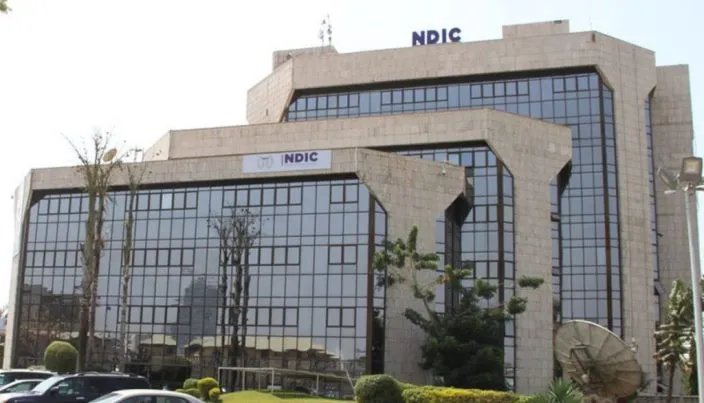
The Nigeria Deposit Insurance Corporation (NDIC) has begun paying insured deposits to customers of 46 failed microfinance banks whose operating licences were recently revoked by the Central Bank of Nigeria (CBN), while intensifying debt recoveries and asset sales to reimburse depositors with balances above the insured limit.
NDIC Managing Director and Chief Executive Officer, Thompson Sunday, disclosed this on Wednesday in Lagos during a retreat for members of the House of Representatives Committee on Insurance and Actuarial Matters.
Speaking on the sidelines of the event, Sunday said the corporation commenced liquidation immediately after the CBN revoked the licences of the affected microfinance banks and appointed the NDIC as provisional liquidator.
“We’ve started paying depositors of those banks, and gradually, we intend to cover all insured depositors,” he said.
Sunday explained that the corporation is also pursuing outstanding loans owed to the failed banks and disposing of their assets to generate funds for the payment of uninsured deposits.
“Our responsibility as liquidator is to pay insured deposits first. Thereafter, we recover outstanding loans and dispose of available assets to raise funds for settling the uninsured portions of deposits,” he said.
He said the NDIC has significantly improved its reimbursement process through a partnership with the Nigeria Inter-Bank Settlement System (NIBSS), enabling automatic payment of insured deposits through customers’ Bank Verification Numbers (BVNs).
Under the arrangement, depositors whose BVNs are linked to accounts in other banks receive their insured funds automatically without having to file claims, reducing delays in the reimbursement process.
According to Sunday, the initiative has also accelerated payments to depositors of Heritage Bank, with about 700,000 customers already reimbursed since the bank’s operating licence was revoked.
He, however, acknowledged that some Heritage Bank depositors have yet to receive their payments because the bank inherited accounts from legacy institutions, including Enterprise Bank, Spring Bank and Guardian Express Bank, many of which existed before the introduction of the BVN system.

“There are depositors that we have not been able to trace, and this is an opportunity for them to come forward. Once they do, we will pay them,” he said.
Sunday added that proceeds from loan recoveries and the disposal of assets belonging to failed banks would be used to settle depositors with balances exceeding the insured limit.
He also said the ongoing banking sector recapitalisation has strengthened the financial system’s capacity to support economic growth but stressed that stronger capital must be matched by effective supervision, sound corporate governance and robust risk management to ensure long-term financial stability.