

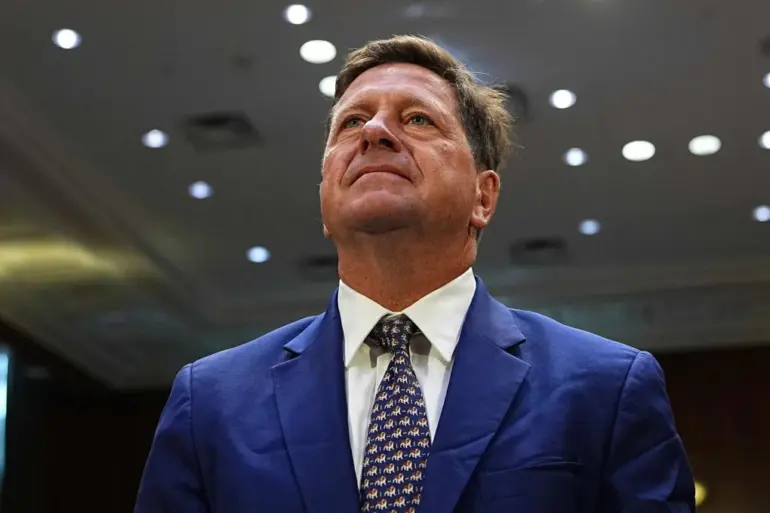
The US Senate on Tuesday confirmed Jay Clayton as President Donald Trump’s Director of National Intelligence, giving the administration a permanent leader for the nation’s intelligence agencies as Trump continues to promote unsubstantiated claims of election fraud ahead of the midterm elections.
The Senate voted 51-47 to confirm Clayton, with all Democratic senators opposing his nomination.
“Jay is outstanding in every way, and will do a spectacular job as Director!” Trump wrote on Truth Social shortly after the vote.
Clayton, a former chairman of the Securities and Exchange Commission and federal prosecutor, succeeds Tulsi Gabbard, who resigned last month. He inherits an 18-agency intelligence community that has faced leadership upheaval and significant staff reductions in recent months.
His confirmation comes amid growing concern that Trump is using national security institutions to revive disputes over the 2020 presidential election and raise questions about the integrity of future elections.
Earlier this month, Trump used a televised White House address to release declassified intelligence that he claimed pointed to Chinese election interference while again falsely asserting that the 2020 election had been stolen.
Clayton replaces acting Director of National Intelligence Bill Pulte, a Trump ally whose appointment drew criticism because of his lack of intelligence experience.
During his brief tenure, Pulte also served as the federal housing regulator, referred several of Trump’s political opponents for possible prosecution, and oversaw sweeping workforce reductions at the Office of the Director of National Intelligence.
Hours before the Senate vote, Pulte said a fifth round of layoffs would reduce staffing at the intelligence coordinating body by roughly 30 percent within weeks.
Democrats voice concerns
While Democrats initially viewed Clayton as a more conventional choice than Pulte, many turned against his nomination following his confirmation hearing.
Pressed repeatedly on whether former President Joe Biden won the 2020 election, Clayton declined to give a direct answer, saying only that Biden had been “certified” as the winner.
“I’m not an election denier,” Clayton told lawmakers, while stopping short of explicitly acknowledging Biden’s victory.
Senate Intelligence Committee Vice Chairman Mark Warner said he left the hearing with “serious reservations” about whether Clayton would be willing to resist political pressure.
“I sincerely hope he proves those concerns unfounded, because the Intelligence Community deserves steadier leadership than it has received in recent months,” Warner said after the confirmation vote.
Senate Democratic Leader Chuck Schumer had earlier described Clayton’s testimony as “abysmal.”

Republicans, however, praised Clayton’s record, pointing to his leadership of the Securities and Exchange Commission during Trump’s first term and his subsequent service as US attorney for the Southern District of New York.
Senate Majority Leader John Thune said Clayton’s experience prosecuting financial crimes and handling national security matters made him well qualified to lead the intelligence community at a time of growing global threats.
Clayton’s confirmation could also revive negotiations over Section 702 of the Foreign Intelligence Surveillance Act, which authorizes the US government to collect communications involving non-US persons abroad without obtaining an individual warrant.
Democrats had opposed extending the surveillance authority while Pulte remained acting intelligence chief, citing concerns about potential executive overreach.
However, any renewal is unlikely before September, as the House of Representatives has already adjourned for its summer recess.
AFP