

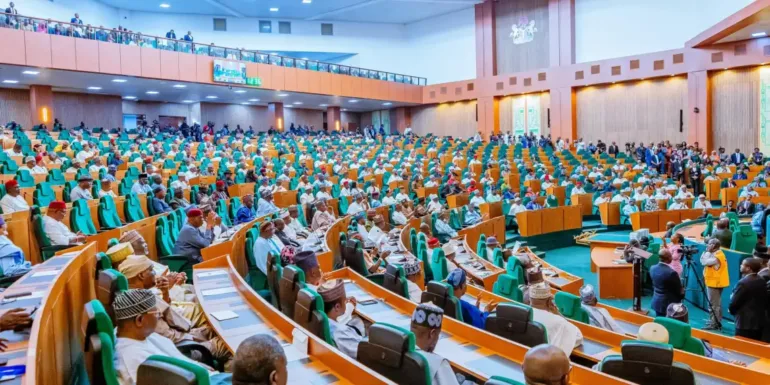
The House of Representatives on Thursday passed the Executive Bill seeking to establish state police, advancing efforts to decentralise Nigeria’s policing structure and strengthen security at the subnational level.
The bill was passed during plenary after lawmakers withdrew an earlier constitutional amendment proposal on state police and adopted the Executive Bill forwarded by President Bola Tinubu.
The development followed the Senate’s passage of a similar version of the legislation, bringing the country closer to introducing a dual policing system that would allow state-controlled police services to operate alongside the Nigeria Police Force.
A total of 311 lawmakers participated in the voting process, with 276 members voting physically in the chamber and 35 others participating virtually, according to Speaker of the House of Representatives, Tajudeen Abbas.
The bill was approved after the House considered and adopted the report of the Committee on the Review of the 1999 Constitution, chaired by Deputy Speaker Benjamin Kalu.
Titled “A Bill for an Act to Alter the Constitution of the Federal Republic of Nigeria, 1999 to Provide for the Establishment of State Police Services and for Related Matters (HB. 2797),” the legislation seeks to amend the Constitution to permit the establishment of state police services alongside the existing federal police structure.
The move represents a major milestone in Nigeria’s decades-long debate over policing reforms, with advocates arguing that state police would improve intelligence gathering, enhance community policing and enable quicker responses to insecurity.
The proposal comes amid persistent security challenges, including kidnapping, banditry, terrorism and other violent crimes across several parts of the country.
President Tinubu had transmitted the Executive Bill to the House last week, saying it was designed to build on previous legislative efforts while introducing safeguards to ensure accountability, effectiveness and coordination within a decentralised policing framework.
Following the submission of the executive proposal, the House rescinded its June 11, 2026 resolution on state police and dissolved the 12-member conference committee established on July 9 to reconcile earlier versions of the constitutional amendment.

Lawmakers subsequently resolved to proceed with the Executive Bill, which provides the legal framework for the creation of state police once the constitutional amendment process is concluded.
The establishment of state police remains one of Nigeria’s most contentious constitutional reforms, with supporters maintaining that devolving policing powers would strengthen local security management, while opponents have raised concerns over possible political interference and abuse of powers.
The bill will now proceed through the remaining stages of the constitutional amendment process before it can become law.