

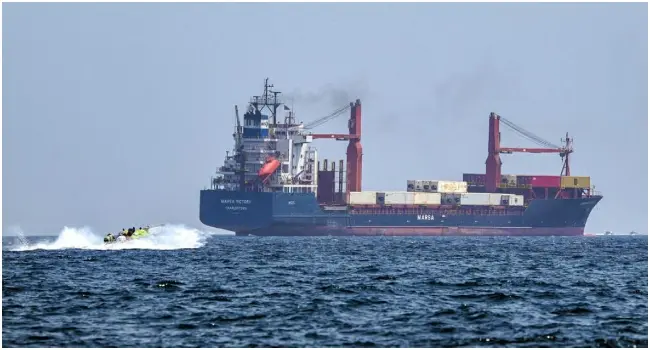
Iran’s Islamic Revolutionary Guard Corps (IRGC) on Wednesday declared that the Strait of Hormuz would remain closed until the United States ends what it described as its “acts of aggression”, while warning that other regional oil and gas export routes serving US interests could also become targets.
The latest threat comes as fighting between the United States and Iran, which erupted in late February, continues to disrupt energy supplies through the Strait of Hormuz—a strategic chokepoint that handles a significant share of global oil and liquefied natural gas shipments.
In statements carried by Iranian state broadcaster IRIB, the IRGC said it had launched attacks on US military facilities in Bahrain and Kuwait in retaliation for American strikes on Iranian territory.
“The enemy should know that now that its maritime raiders have blocked the Indian Ocean route for oil and gas exports to the world—thereby endangering the interests of America’s economic rivals—it should also expect the closure of other oil and gas export routes that serve the interests of the United States and its allies,” the Guards said.
The IRGC did not specify which additional routes could be targeted but warned that “oil and gas exports from the region will either be available for everyone or for no one.”
In a separate statement, the force reiterated that “the retaliatory operations of the fighters will continue, and the Strait of Hormuz will remain closed until the United States ends its acts of aggression.”
US officials have repeatedly dismissed Tehran’s claims that it can control navigation through the Strait of Hormuz, insisting that international shipping lanes remain open.
US and Iran exchange strikes
The escalating conflict intensified on Wednesday after US forces launched strikes on Iranian military targets and reimposed a naval blockade on Iranian ports, prompting Tehran to retaliate with attacks on American military installations in the Gulf.
The developments came hours after US President Donald Trump withdrew a proposed 20 per cent levy on ships transiting the Strait of Hormuz, opting instead to pursue trade and investment agreements with Gulf allies.
Tehran maintains that it has authority over the strategic waterway, which had remained open to international navigation before the conflict with the United States and Israel erupted in late February.
Deputy Foreign Minister Kazem Gharibabadi said Washington’s decision to restore the naval blockade had “in a way, dismantled the Islamabad memorandum,” referring to the interim agreement reached last month to suspend hostilities and pursue peace negotiations.
The US Central Command (CENTCOM) said its forces struck dozens of Iranian military targets near the Strait of Hormuz and along Iran’s southern coastline to “degrade Iran’s ability to threaten commercial shipping and civilian crews.”
Iranian state media reported explosions near Bandar Abbas, Qeshm Island and Bandar Imam Khomeini following the strikes.
Shortly afterward, air raid sirens sounded in Bahrain, while Kuwait and Jordan reported intercepting Iranian drones and missiles. Iran’s state news agency IRNA said Iranian forces also launched a drone attack on a military base in Jordan hosting US aircraft.
President Trump warned that the United States would expand its military campaign to include Iranian power plants and bridges if Tehran refuses to return to negotiations.
“Next week it gets really bad for them,” Trump said in an interview with Fox News.
Shipping disruptions deepen
Since the conflict began, Iran has repeatedly asserted its control over the Strait of Hormuz and has targeted vessels it says were using unauthorised routes, triggering retaliatory military action by the United States.
The escalating attacks have pushed global crude oil prices up by more than 10 per cent over the past week amid growing concerns over disruptions to one of the world’s most important energy corridors.
CENTCOM commander Admiral Brad Cooper said Iran had attacked seven commercial vessels over the past week, leaving nearly a dozen civilian crew members dead, missing or injured.
“US forces are holding Iran accountable for unwarranted aggression that continues to endanger innocent lives,” he said.
Separately, maritime security firm MTI Network reported that a Norwegian tanker was damaged by an explosion caused by an unidentified device off the Omani coast early Tuesday. Kuwait also said one of its naval vessels was struck during an Iranian missile and drone barrage, injuring four crew members.
Trump said he had abandoned the proposed transit levy for ships using the Strait of Hormuz, replacing it with plans for expanded trade and investment agreements with Gulf partners.
“I have decided to replace the 20% United States Reimbursement Fee with Trade and Investment Deals that the various Gulf States will be making into the United States,” Trump wrote on his Truth Social platform.
According to an AFP tally based on Iranian official statements and local media reports, renewed US strikes have killed at least 28 people in Iran since last week.
Meanwhile, Israeli Prime Minister Benjamin Netanyahu warned Tehran against launching attacks on Israel, saying the country would respond forcefully.
Speaking from Dimona in southern Israel, Netanyahu declared: “Do not count on things remaining quiet if you attack us.”
“The days are over when someone strikes us, and we don’t hit back with a decisive blow.”
AFP
