

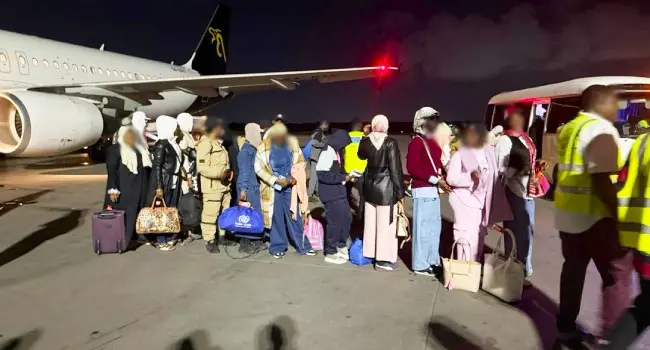
The International Organisation for Migration (IOM) has received another batch of Nigerian migrants evacuated from Libya as part of ongoing efforts to address irregular migration and support vulnerable returnees.
The 180 returnees, comprising mainly women and children, arrived at the Murtala Muhammed International Airport in Lagos aboard a chartered flight from Libya.
According to the IOM, many of them had endured harsh conditions, including detention, exploitation and prolonged uncertainty while attempting to migrate irregularly to Europe.
On arrival, the returnees were provided with immediate assistance, including health screening and psychosocial counselling, while eligible beneficiaries are expected to receive reintegration support aimed at helping them rebuild their lives.
“The latest operation is part of ongoing collaboration between the IOM, the Federal Government and international partners to facilitate voluntary returns and promote safer migration pathways,” the agency said in a statement.
The IOM noted that it has assisted in the return of more than 65,500 stranded Nigerian migrants over the past nine years. It also disclosed that over 30,000 returnees have received psychological, social and economic reintegration support.
Speaking at a migration reporting workshop in Lagos, the agency reiterated its commitment to promoting safe and regular migration channels while urging greater public awareness and responsible media coverage of migration issues.
Concerned about the risks associated with irregular migration, the Federal Government had in May 2026 cautioned Nigerians against travelling abroad without valid travel documents.

The Nigeria Immigration Service (NIS), in a public advisory, stressed that irregular migration is illegal and exposes individuals to significant dangers.
It warned that all international travel must be conducted with valid passports, visas (where required) and other approved immigration documents, adding that attempts to bypass official procedures or use irregular routes constitute a violation of Nigerian law.