

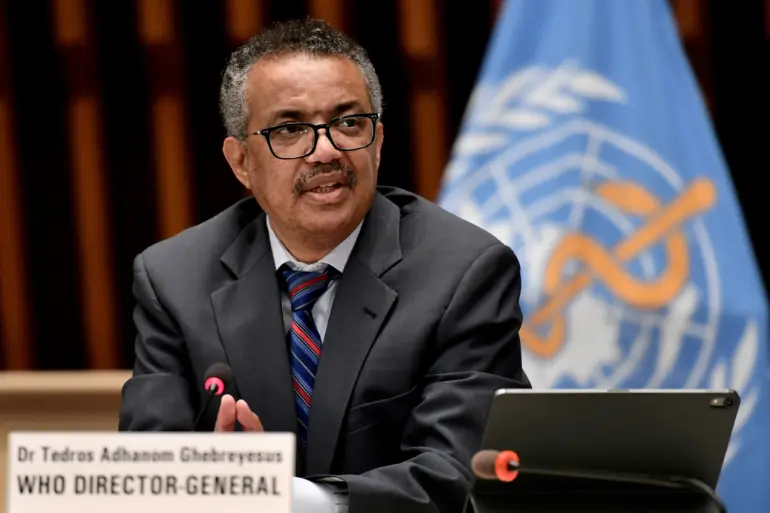
The World Health Organization’s chief said Thursday he was heading to the Democratic Republic of Congo to support health workers battling a deadly Ebola outbreak, expressing confidence the virus would be contained.
“I want you to know that you are not alone,” WHO Director-General Tedros Adhanom Ghebreyesus said in a message posted on X, addressing the Congolese people.
“Together, we will overcome this outbreak,” he said, adding that he would do “everything in my power” to support the response.
According to the WHO’s latest figures up to May 24, the outbreak has recorded 10 confirmed and 223 suspected Ebola-related deaths in the DRC since it was declared on May 15, with more than 1,000 confirmed and suspected cases in total.
The agency has warned that the true scale of the outbreak, which may have been circulating undetected for some time, is likely significantly larger.
This is the 17th Ebola outbreak recorded in the vast central African nation of more than 100 million people.
Response efforts are being complicated by insecurity in eastern DRC, a mineral-rich region that has endured decades of violence involving multiple armed groups.
In the latest escalation, the Rwanda-backed M23 rebel group has seized swathes of territory since 2021, with fighting intensifying over the past 18 months.
Tedros has called on all warring parties to halt hostilities.
“Conflict and displacement make everything harder,” he said. “I am making a direct appeal to all parties in this region: please declare a ceasefire. No cause, no conflict, no grievance is worth condemning innocent people to death from a preventable disease.”
Vaccine efforts
There is currently no approved vaccine or treatment for the Bundibugyo strain of Ebola driving the outbreak, although efforts are underway to develop one.
Jean Kaseya, head of the Africa Centres for Disease Control and Prevention (Africa CDC), said a vaccine and treatment could be ready by the end of 2026.
“What we can tell you for sure is that by the end of 2026, Africa CDC will ensure we have a vaccine and treatment against Bundibugyo,” he told reporters in an online briefing.
“Our leaders are ready to invest. We are investing at both technical and strategic levels to make sure this happens,” he added.
Tedros is expected to arrive in the DRC on Thursday evening and travel to Bunia, the capital of Ituri province, the epicentre of the outbreak.
The WHO said 4.6 tonnes of medical supplies have already arrived at Bunia airport, while UNICEF said it is sending an additional 100 tonnes of aid.
Regional and international response
Neighbouring Uganda has confirmed one Ebola-related death and six additional cases and has closed its border with the DRC with immediate effect.
The United States said it would not allow people infected with the virus to enter the country.
The administration of US President Donald Trump is also working to establish a treatment facility for infected US citizens in Kenya, rather than repatriating them for care in the United States as in previous outbreaks.
However, a Kenyan rights group has filed a court petition seeking to block the facility, warning it could strain the country’s already stretched health system.
Ebola has killed more than 15,000 people across Africa over the past five decades. The deadliest outbreak in the DRC, between 2018 and 2020, claimed nearly 2,300 lives out of 3,500 recorded cases.
AFP