
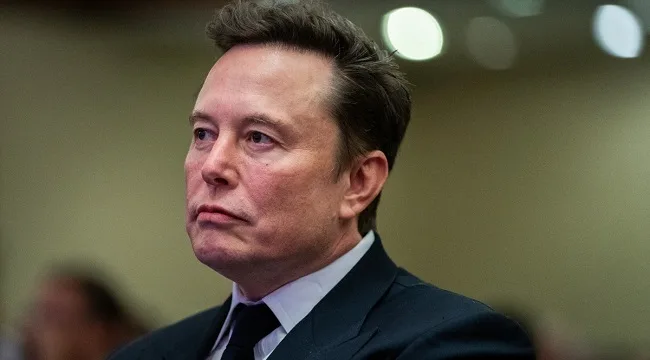
Jury selection is set to begin Monday in a high-profile legal showdown between billionaire Elon Musk and artificial intelligence company OpenAI, which Musk accuses of abandoning its original non-profit mission.
The case, unfolding in a courtroom near San Francisco, pits the world’s richest man against a company he once helped fund, and now directly competes with in the rapidly expanding AI industry.
At the center of the rivalry are competing AI products: OpenAI’s ChatGPT and the Grok chatbot developed by Musk’s xAI venture.
While the lawsuit stems from a long-running feud between Musk and OpenAI CEO Sam Altman, it also raises a broader question: should artificial intelligence serve the public good, or primarily benefit a privileged few?
Court filings reveal that in 2015, Altman persuaded Musk to support OpenAI as a nonprofit research lab whose technology would “belong to the world.” Musk ultimately contributed around $38 million before parting ways with the organization.
Today, OpenAI has transformed into one of the most valuable companies in the world, backed by major investors including Microsoft, and is reportedly preparing for a public listing.
The trial, overseen by Judge Yvonne Gonzalez Rogers, is expected to hinge on whether OpenAI broke its original commitments in pursuit of commercial success, or simply adapted to the realities of scaling cutting-edge AI.
Claims of deception
Musk argues he was misled about OpenAI’s intentions. He points to a 2017 email in which Altman reaffirmed commitment to a nonprofit structure, even as Musk considered withdrawing funding.
However, months later, OpenAI created a for-profit subsidiary, citing the enormous capital required to build advanced AI systems. In the years that followed, Microsoft invested billions, significantly increasing its stake in the company.
Microsoft CEO Satya Nadella is among those expected to testify.
What Musk wants
Musk’s lawsuit calls for sweeping changes: a return to OpenAI’s nonprofit roots, the removal of Altman and co-founder Greg Brockman, and damages of up to $134 billion. He also seeks to force OpenAI to cut ties with Microsoft.
During pre-trial proceedings, Judge Rogers expressed skepticism about the scale of the damages, suggesting Musk’s team may be “pulling numbers out of the air.”
If the jury rules in Musk’s favor, the judge will determine any financial penalties or structural remedies. Musk has stated that any awarded damages would go to OpenAI’s nonprofit arm—though the company has dismissed the lawsuit as a publicity move.

Power struggle or principle?
Internal OpenAI communications revealed in the case highlight tensions that led to Altman’s brief removal as CEO in late 2023. They also suggest early concerns about the shift away from a purely nonprofit model.
OpenAI now operates under a hybrid structure, where a nonprofit entity oversees a for-profit arm.
In its defense, OpenAI argues that its split with Musk was driven not by mission drift, but by Musk’s desire for greater control.
“This case has always been about Elon generating more power and more money,” the company said in a post on X, the platform owned by Musk. “It’s a harassment campaign driven by ego, jealousy, and a desire to slow down a competitor.”
The company also noted that shortly after launching his own AI venture in 2023, Musk publicly called for a six-month pause on advanced AI development, underscoring the competitive tensions at the heart of the dispute.
AFP