
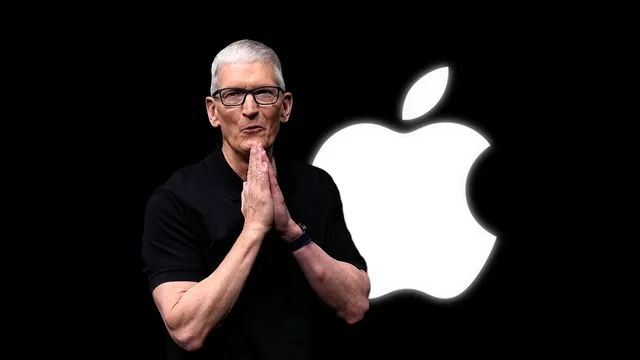
Apple on Monday announced that Tim Cook will step down as chief executive officer in September, handing over leadership of the tech giant to longtime company executive John Ternus.
The move resolves longstanding speculation about succession at Apple, with the 65-year-old Cook set to transition into the role of executive chairman after relinquishing the CEO position.
“It has been the greatest privilege of my life to be the CEO of Apple and to have been trusted to lead such an extraordinary company,” Cook said in a statement.
Cook joined Apple in 1998 and rose through the ranks to become chief operating officer, where he played a central role in managing the company’s global supply chain. He was appointed CEO in 2011 following the departure of co-founder Steve Jobs due to health concerns.
During his tenure, Cook oversaw a significant expansion of Apple’s product ecosystem and led the company to a market valuation of roughly $4 trillion. He also spearheaded the strategy that established China as Apple’s primary manufacturing hub, with most iPhones assembled by contractors such as Foxconn.
“Tim’s unprecedented leadership has transformed Apple into the world’s most valuable company,” said Arthur Levinson, the outgoing chairman of the board. Levinson will transition to the role of lead independent director.
Ternus, who joined Apple’s product design team in 2001, currently serves as senior vice president of hardware engineering. Over the past two decades, he has contributed to the development of key products including the iPhone, iPad, Apple Watch, and Mac.
“Having spent most of my career at Apple, I’ve been fortunate to work under Steve Jobs and to be mentored by Tim Cook,” Ternus said.
A pivotal moment at 50
The leadership transition comes as Apple marks its 50th anniversary, facing mounting pressure to deliver breakthroughs in artificial intelligence amid intensifying competition from rivals such as Google, Microsoft, and OpenAI.
Founded in 1976 by Jobs and Steve Wozniak, Apple helped redefine personal computing, digital music, and mobile communication, building a loyal global following around products like the Mac, iPhone, iPad, and Apple Watch.
However, analysts say the company now faces a critical test in AI. A planned upgrade to its Siri voice assistant has been delayed, and Apple has reportedly leaned on external partners, including Google, to bolster its AI capabilities.

“Apple is undergoing a major shift in its AI strategy, and Cook’s departure at this moment is surprising,” said Dan Ives. “There will be significant pressure on Ternus to deliver results quickly, particularly in AI.”
While Cook successfully expanded Apple into new product categories such as wearables and services, critics note the absence of a transformative “next big thing” on the scale of Jobs-era innovations.
Recent challenges include the cancellation of a long-running electric vehicle project in 2024, early missteps with Apple Maps, and limited market traction for the high-end Apple Vision Pro, priced at $3,500.
As Ternus prepares to take the helm, Apple enters a new chapter—balancing its legacy of innovation with the urgent need to compete in the rapidly evolving AI landscape.