

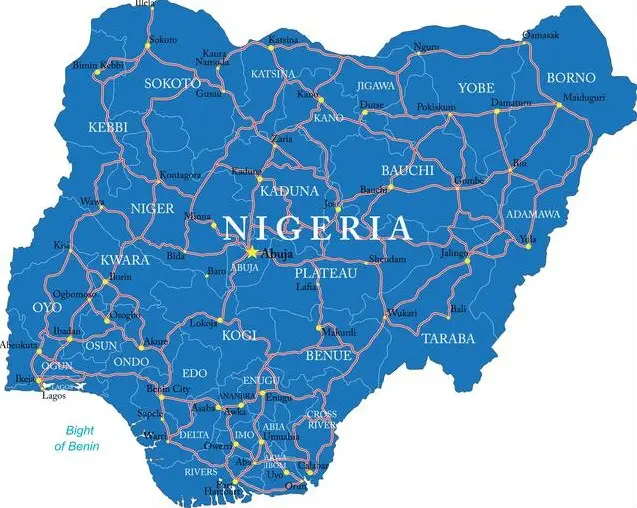
I am from Imo State, but I live in Enugu. I work here, I pay my taxes here, my children will go to school here. Enugu is where I build my dreams, contribute to the economy, and participate in the daily life of my community. Yet, in the eyes of Nigeria’s legal and administrative system, I remain primarily a citizen of Imo, my “state of origin.” If I seek certain government jobs, apply for state‑sponsored scholarships, or even aspire to political office in Enugu, I can be told I am not an “indigene.” I am, in effect, a permanent guest in the place I call home.
This is the reality for millions of Nigerians. Our current framework gives overwhelming weight to state of origin: a fixed label assigned at birth, tied to ancestral ethnicity, while state of residence, where we actually live, work, and contribute, remains secondary. I believe this is a fundamental flaw in how we structure belonging. If we are serious about reducing ethnic bias, strengthening accountability, and building a true national identity, we must elevate state of residence from the age of eighteen. This is not about erasing heritage; it is about recognising that in a modern federation, citizenship should be based on where you live, contribute, and choose to build your future.
State of origin was designed to ensure federal character, to prevent any region or ethnic group from dominating national institutions. But over time, it has become a tool of exclusion. In many states, government employment, admissions to tertiary institutions, and even political appointments are reserved for “indigenes,” locking out long‑term residents. The indigene‑settler divide fuels communal tensions and makes it possible for governors to ignore residents who do not share their ethnic background and even discriminate against people from neighbouring states within the same region.
For someone like me, who has lived in Enugu for years, this is deeply unjust. I contribute to Enugu’s economy through taxes and consumption. I vote in Enugu (for federal elections, at least). I am invested in its roads, schools, and security. Yet because my state of origin is Imo, I can be treated as an outsider. The message is clear: no matter how long you stay, you never truly belong. This undermines national unity and discourages the very integration we need.
My proposal is simple: from the age of eighteen, a Nigerian citizen’s primary legal and administrative identity should be their state of residence. State of origin would still be recorded for cultural heritage because it is part of who we are, but it would no longer determine access to rights, opportunities, or political representation.
Why eighteen? Because that is the threshold of adulthood. It is when a Nigerian becomes politically conscious, registers to vote, enters the workforce, and begins paying taxes. It is when we start making conscious choices about where we want to build our lives. By anchoring civic identity to residency from this age, we encourage young people to think deliberately about where they choose to live, not just as a place to hustle, but as a community they can invest in and demand accountability from. A student who attends university in Lagos, graduates, and decides to settle there can gradually become a full citizen of Lagos, with all the rights and responsibilities that entails.
I am aware that a reform of this magnitude requires careful design. But the mechanics are not impossible; they simply require political will and a modern infrastructure.
(1.) A National Residency Registry
We already have the National Identity Number (NIN) Database. In a reformed system, every Nigerian’s NIN would be linked to a single, verified current address of residence. When a person relocates, whether from Enugu to Lagos, or Lagos to Abuja, they would be required to update their address with the National Identity Management Commission (NIMC) and their new local government. This could be done digitally, with proof of residence (tenancy agreement, utility bill, etc.). The old address is retired, creating a verifiable history of where a person has lived over time.
This solves the concern about relocation. If I move from Enugu to Lagos, I simply update my records. My tax obligations shift to Lagos; my voting registration transfers after a reasonable period (say, six months); and I cease to be a resident of Enugu for state‑level rights. There is no confusion, no double‑claiming. The system tracks where I have been, which is also valuable data for planning and revenue allocation.
(2) Aligning Taxation and Representation
One of my strongest arguments for this reform is that it aligns taxation with representation. Today, I pay my taxes in Enugu, yet I have no right to run for local office or to be considered for state government employment on the same footing as someone from Enugu State of origin. Under a residency‑based system, every adult resident becomes a full constituent. Governors and local government chairmen would be accountable to all residents, because every resident can vote and hold them accountable. This shifts governance from ethnic favoritism to performance‑based service delivery.
(3.) Parameters for Political Office
To prevent “carpetbagging” (someone moving to a state just before an election to contest) we should establish minimum residency requirements for political office. Drawing from the example of federations like Switzerland, we can set thresholds that ensure genuine connection:
- Governor or Deputy Governor: At least 10–15 years of continuous residence in the state, and perhaps a record of tax payment for a significant portion of that period.
- Senator or House of Representatives (federal offices): A shorter period, such as 5–7 years, could suffice, given these are national positions, but still enough to demonstrate roots.
- Local Government Chairman: 3–5 years of residence in the local government area.
These thresholds create an incentive to stay and invest in a community. The longer you reside, the more eligible you become to lead. It encourages political ambition to be rooted in service to a place where one has built a life, not merely ancestral claims.
A natural question arises: if people can move frequently, does residency become too fluid? My answer is that residency is fluid by nature: people move for jobs, education, family, and opportunity. Our system should accommodate that reality rather than pretend it doesn’t exist.
Under this model, every time you relocate, your rights and responsibilities shift to your new state after a short transition period. This does not weaken accountability; it strengthens it because each state’s leaders are now responsible for a dynamic population that can choose to leave if governance is poor. This introduces healthy competition among states to provide good services, security, and economic opportunities. States that govern well will attract and retain residents; those that govern poorly will see people leave. That is a powerful incentive for improvement.
Moreover, the requirement of a minimum period (e.g., one year) to gain full voting rights in state elections ensures that people cannot simply “shop” for a state right before an election. The system rewards genuine, sustained residency.

Personally, I believe that the most important benefit of this reform is its impact on how we see ourselves as Nigerians. When state of origin is the primary identity marker, ethnicity remains the central organising principle of our politics and society. But when state of residence becomes the basis of rights, we begin to see ourselves as citizens of the places we choose to call home.
A young person from Maiduguri who moves to Port Harcourt for work, stays for years, and eventually becomes a full citizen of Rivers State, with the right to vote, hold office, and access state benefits, will no longer be a “settler.” They are a member of the community. Their loyalty is to the place they have invested in, not just to an ancestral homeland they may have left as a child. Over time, this weakens the ethnic polarisation that has so often been exploited by our politicians. It builds a sense of shared destiny across ethnic lines.
I am aware that no idea is 100% foolproof, and this one faces real challenges. Constitutional amendments would be required to redefine citizenship, federal character, and the criteria for political offices. The federal character principle, which currently relies on state of origin, would need to evolve, perhaps into a formula that uses residency data over a long period, or a combination of both origin and residency with safeguards against manipulation.
There is also the risk of fraud with people claiming false residency to gain advantages. That is why a credible, real‑time national database is essential. With the NIN system and proper enforcement, we can minimise abuse. Additionally, traditional institutions and customary land rights, often tied to ancestry, must be respected. The reform should focus on civic rights and political participation, not on overturning cultural traditions.
These challenges are significant, but they are not insurmountable. They require political will, honest dialogue, and a commitment to the long‑term goal of a more integrated, equitable Nigeria.
My state of origin is Imo State, but I live in Enugu. I pay my taxes here. I contribute to the economy. I will send my children to school here. I have a stake in whether Enugu’s roads are good, our taps are running, its hospitals functional, and its government accountable. Yet today, if I ever wanted to run for local office, I would be dismissed as a non‑indigene. Infact, it will be my downfall. This isn’t just a personal grievance; it is a structural barrier that prevents millions of Nigerians from fully belonging to the communities they have chosen.
By elevating state of residence from age eighteen, we can change that. We can create a system where belonging is based on contribution, not ancestry. Where governors are accountable to every resident, regardless of ethnic background. Where young people can deliberately choose a state to build their lives, knowing that over time they will become full citizens of that state. Where relocation is not a loss of identity but an expansion of opportunity.
This reform will not eliminate ethnic consciousness overnight; heritage will always matter. But it will break the link between ethnicity and legal status, and it will give every Nigerian the chance to truly call one place home. That is how we build a nation.
Adachukwu Onwudiwe wrote from Enugu state, Nigeria.