

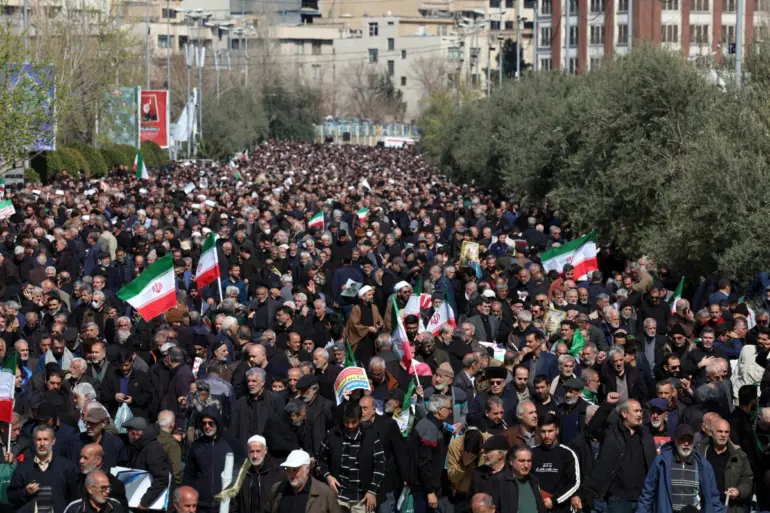
Iran has received a 15-point plan from the United States aimed at ending the Middle East conflict, Pakistani officials said Wednesday, raising hopes for a diplomatic solution even as Iran reportedly fired a volley of cruise missiles at a US aircraft carrier.
The conflict, which began on February 28 with a US-Israeli bombing campaign on Iran, has rapidly spread across the region, sending oil prices soaring and threatening global economic stability.
US President Donald Trump has repeatedly claimed progress in talks with Tehran, though Iran has denied any negotiations are underway. Pakistani officials told AFP that the US proposals to halt the fighting were “conveyed to Iran” via Islamabad intermediaries, highlighting Pakistan’s potential role as mediator due to its longstanding ties with both Iran and the United States.
Despite these tentative diplomatic efforts, military activity continues unabated. Targets in Iran, Israel, Lebanon, Bahrain, Kuwait, Jordan, and Saudi Arabia have all been struck. Iran’s military said its cruise missile salvo against the USS Abraham Lincoln carrier group “forced it to change position,” warning of “powerful strikes” against any “hostile fleet” within range.
Meanwhile, Israel reported targeting sites in Tehran as well as a submarine development facility in Isfahan.
From Tehran, 40-year-old Shayan told AFP: “There is gasoline, water and electricity. But there is a sense of helplessness in all of us. We don’t know what to do, and there’s really nothing we can do.”
Escalation in Lebanon
On another front, Israeli warplanes struck southern suburbs of Beirut, a stronghold of Iran-backed Hezbollah. An AFP correspondent saw streets littered with debris and damaged apartment buildings.
Lebanon was drawn into the war when Hezbollah fired rockets into Israel on March 2 in retaliation for the killing of Iran’s Supreme Leader, Ayatollah Ali Khamenei. Over the past three weeks, Lebanese authorities report more than 1,000 deaths and around one million displaced.
In Tyre, a southern city heavily affected by strikes, Khalil, a man in his 30s, expressed defiance. “They’ll have to take us by force,” he told AFP. “We don’t want to leave our land… our heart is here,” he added, sheltering with his family in a theatre.
Behind-the-scenes diplomacy
Diplomatic efforts continue, though both sides offer conflicting public accounts. A regional diplomatic source told AFP: “There is hope but it’s too early to be optimistic. Both sides need a way to step back without losing face.”
In Tehran, Iran maintained a strong public posture. Speaker of Parliament Mohammad Bagher Ghalibaf warned the US: “Do not test our resolve to defend our land.”
According to Israel’s Channel 12, Trump’s proposals include a ceasefire and a 15-point agreement covering measures such as banning uranium enrichment in Iran and reopening the Strait of Hormuz, in exchange for sanctions relief. The Trump administration previously offered a similar plan ahead of a shorter US-Israeli bombing campaign against Iran in June.
Global economic impact
Markets reacted to signs of possible de-escalation, with stocks rising and oil prices falling. However, concerns remain over the Strait of Hormuz, a vital oil passage through which one-fifth of the world’s oil flows.
Trump told reporters that Iran had given him “a very big present worth a tremendous amount of money,” hinting at a move linked to the Strait of Hormuz. Tehran assured safe passage for “non-hostile vessels” but barred entry to US and Israeli ships.
The International Energy Agency indicated readiness to release additional oil reserves if needed to stabilize global markets. Meanwhile, countries are already feeling the economic strain: Sri Lanka added an extra work-free day to conserve energy, while diesel prices have doubled in Vietnam. Truck driver Nguyen Van Chi said he had stopped using his vehicle entirely. “With this unbelievable price of diesel, I cannot even sell my truck as no one is going to use it,” he said.
AFP
