

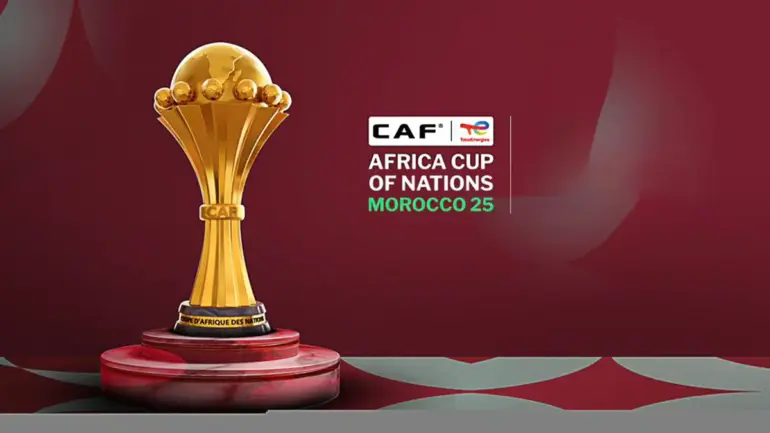
The Confederation of African Football (CAF) has officially revised its records to recognise Morocco as champions of the 2025 Africa Cup of Nations, with Senegal now listed as runners-up.
The update follows a March 18 ruling by CAF’s Appeals Board, which overturned the on-field result of the January 18 final played in Rabat.
A check of CAF’s official website on Monday confirmed the change, with Morocco now recorded as winners of the TotalEnergies CAF AFCON Morocco 2025. Senegal has been moved to second place, while Nigeria retains third position.
The decision hands Morocco its second AFCON title, and its first since 1976.
The final, held at the Prince Moulay Abdellah Stadium, was marred by controversy. After a goalless 90 minutes, tensions flared deep into stoppage time when the referee awarded Morocco a penalty following a VAR review for a foul on Brahim Díaz by Senegal’s El Hadji Malick Diouf.
Moments earlier, Senegal had a goal ruled out for a foul in the build-up, a decision that sparked outrage among players and coaching staff.
In protest, Senegal head coach Pape Thiaw instructed his players to walk off the pitch, leading to a temporary suspension of the match. The disruption was accompanied by reported clashes among fans and disturbances in the press area.
Senegal captain Sadio Mané later convinced his teammates to return, allowing play to resume. The penalty awarded to Morocco was subsequently saved by goalkeeper Édouard Mendy.
The match proceeded into extra time, where Pape Gueye scored in the 94th minute to give Senegal a 1–0 lead. Senegal went on to celebrate what appeared to be a historic second AFCON triumph.
However, Morocco’s football federation filed an immediate protest, citing a breach of competition regulations.
CAF’s Appeals Board upheld the protest, ruling that Senegal’s temporary walk-off violated Article 82 of the tournament rules. Under Article 84, such an infraction results in an automatic 3–0 forfeiture.
In a statement, CAF declared that “the Senegal national team is deemed to have forfeited the final, with the match awarded 3–0 in favour of the Royal Moroccan Football Federation.”
The ruling has triggered widespread debate across the football community.
Senegal’s football federation condemned the decision as “unfair, unprecedented and unacceptable,” arguing that it undermines the integrity of African football. The body has announced plans to challenge the ruling at the Court of Arbitration for Sport (CAS).
In contrast, Moroccan officials and supporters have welcomed the verdict, insisting it reflects a proper application of established rules.
The incident has also reignited criticism of officiating standards, with many observers describing the refereeing in the final as substandard.
The decision marks one of the most unusual conclusions in international football history, coming months after the final had been played and initially celebrated.