

Nigeria’s net foreign exchange reserves surged by 772 percent over two years, rising from $3.99 billion at the end of 2023 to $34.80 billion as of December 2025.
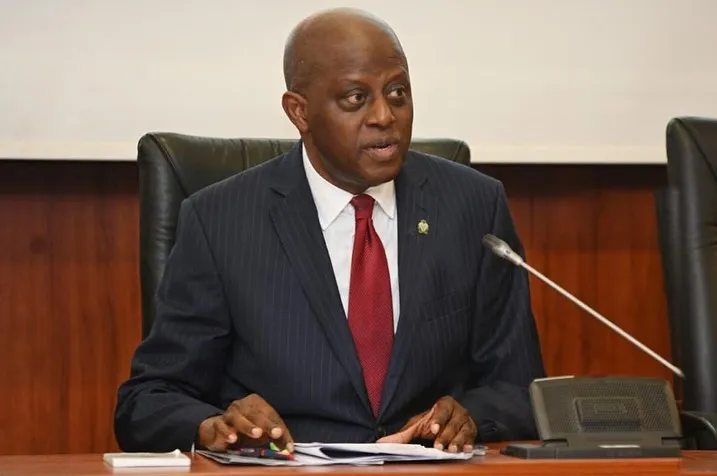
The Governor of the Central Bank of Nigeria (CBN), Olayemi Cardoso, disclosed this in a statement on Monday.
The announcement follows last week’s post–Monetary Policy Committee (MPC) briefing, where Cardoso revealed that Nigeria’s gross external reserves stood at $50.45 billion as of February 16, 2026.
In the latest statement, the CBN governor said the sharp rise in net reserves reflects improved transparency and credibility in foreign exchange management. He noted that reforms have strengthened investor confidence, attracted higher foreign exchange inflows, and enhanced reserve management practices focused on capital preservation, liquidity, and long-term sustainability.
According to Cardoso, the increase marks a significant improvement in both the size and quality of Nigeria’s external buffers over the past three years.
“Net reserves increased sharply from $3.99 billion at the end of 2023 to $34.80 billion at the close of 2025, reflecting a fundamental improvement in reserve quality,” he said.
He added that the 2025 net reserve figure alone exceeded the country’s total gross reserves at the end of 2023, which stood at $33.22 billion.

Providing further breakdown, Cardoso said net reserves rose from $23.11 billion at the end of 2024 to $34.80 billion by the end of 2025. Over the same period, gross external reserves climbed from $40.19 billion to $45.71 billion, an increase of $5.52 billion.
He said the growth underscores Nigeria’s strengthened capacity to meet external obligations, support exchange rate stability, and bolster overall macroeconomic resilience.
Describing the end-2025 reserve position as a strong validation of the Bank’s reform agenda and external sector adjustments, Cardoso reaffirmed the CBN’s commitment to maintaining adequate reserve buffers, ensuring orderly foreign exchange market operations, enhancing confidence in Nigeria’s external position, and sustaining macroeconomic stability in line with its statutory mandate.