

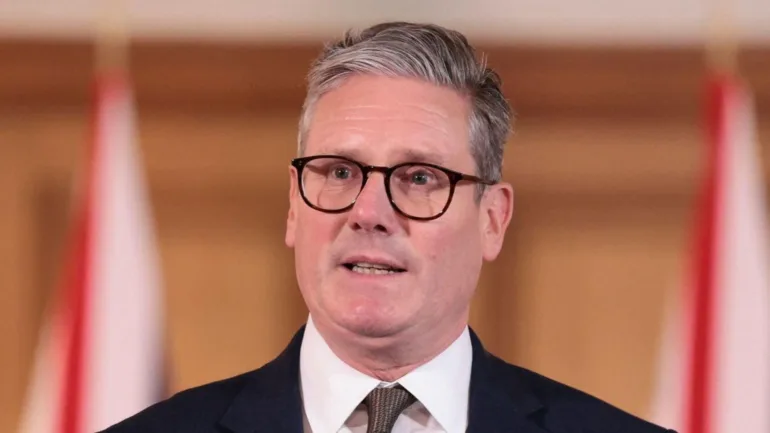
A defiant British Prime Minister, Keir Starmer, on Tuesday sought to draw a line under intense speculation about his political future after withstanding mounting calls to resign over the Jeffrey Epstein-linked scandal engulfing his government.
After a turbulent Monday that saw his leadership openly challenged, the Labour leader told a meeting of senior ministers that the government remained “strong and united,” insisting he would not step down just 19 months into a five-year mandate.
Starmer’s position appeared most vulnerable when Scottish Labour leader Anas Sarwar publicly urged him to resign over his decision to appoint veteran politician Peter Mandelson as the UK’s ambassador to the United States, despite Mandelson’s past links to the late convicted sex offender Jeffrey Epstein.
However, efforts to ignite an internal revolt quickly faltered as cabinet ministers and senior party figures rallied behind the prime minister, blunting the prospect of an immediate leadership crisis.
“The prime minister thanked the political cabinet for their support. He said they were strong and united,” Downing Street said in a statement following the meeting.
Later on Tuesday, Starmer dismissed calls for internal division during a public engagement, warning against infighting within the party.
“I say to them, I will never walk away from the mandate I was given to change this country,” he said.
The controversy surrounding Mandelson’s short seven-month tenure in Washington has become the gravest test of Starmer’s leadership, fuelling criticism of his judgement and intensifying frustrations among Labour MPs already alarmed by the party’s struggles in opinion polls ahead of looming local elections.
Starmer’s authority has also been weakened by a series of policy reversals and senior staff departures, including the loss of four communications chiefs and two chiefs of staff since taking office.
On Sunday, Morgan McSweeney — the chief architect of Starmer’s leadership project — resigned after being blamed for advising the prime minister to make the controversial Mandelson appointment. His exit deprived Starmer of a key strategist who had helped steer Labour back towards the political centre following its defeat under former leader Jeremy Corbyn.
The pressure deepened on Monday when communications chief Tim Allan resigned just months into the role, marking the second senior departure in as many days.
Sarwar, who faces tough elections in Scotland in May, became the most senior Labour figure to call for Starmer’s resignation, saying the ongoing crisis had become a damaging distraction.
Yet senior party figures quickly closed ranks. Deputy Prime Minister Angela Rayner, Home Secretary Shabana Mahmood, Welsh Labour leader Eluned Morgan, and Greater Manchester Mayor Andy Burnham all publicly backed Starmer, despite some being viewed as potential leadership contenders.
Mandelson was dismissed as ambassador in September last year after US congressional documents revealed the extent of his relationship with Epstein following the financier’s 2008 conviction for soliciting a minor. Epstein died by suicide in prison in 2019 while awaiting trial on sex-trafficking charges.

Further documents released by the US government on January 30 suggested Mandelson leaked confidential UK government information to Epstein while serving as a minister, including during the 2008 financial crisis.
British police are investigating Mandelson, 72, for alleged misconduct in public office and have raided two of his properties. He has not been arrested.
Starmer has apologised to Epstein’s victims and accused Mandelson of misleading the government during the vetting process for his ambassadorial appointment.
The government is expected to release tens of thousands of emails, messages and documents related to Mandelson’s appointment, a move likely to sustain pressure on Starmer and his inner circle.
With no clear successor emerging and party rules making leadership challenges difficult, Starmer now faces a critical by-election on February 26, followed by local elections in May, both of which could prove decisive for the future of his premiership.
AFP