

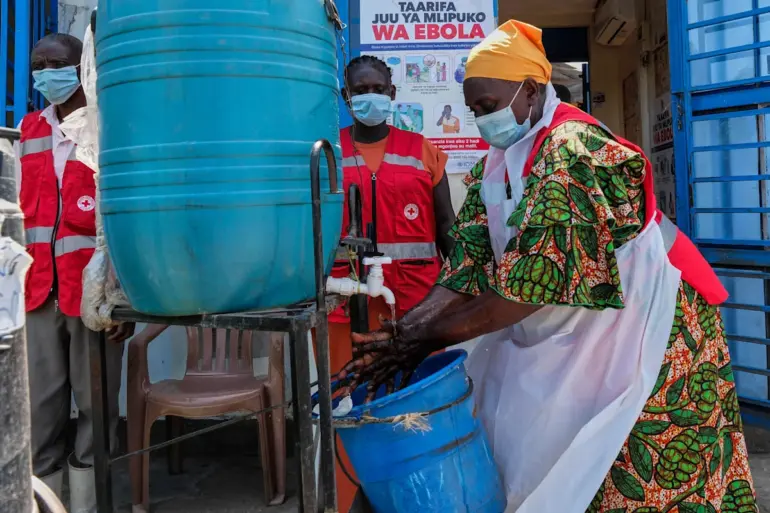
The World Health Organisation (WHO) and the Africa Centres for Disease Control and Prevention (Africa CDC) on Friday launched a joint $518 million response plan aimed at containing the Ebola outbreak affecting the Democratic Republic of Congo (DRC) and neighbouring countries.
The six-month plan, which will run from June to November, is designed to strengthen efforts to curb the spread of the virus and prevent further transmission across the region.
The outbreak was officially declared on May 15 in northeastern DRC. However, health authorities believe the rare Bundibugyo strain of the Ebola virus had been circulating undetected for some time before it was identified.
According to the latest WHO data, the DRC has recorded 381 confirmed cases, including 64 deaths.
The outbreak has spread across three provinces in northeastern DRC, with Ituri Province emerging as the epicentre. Africa CDC estimates that Ituri accounts for about 90 per cent of confirmed infections and 76 per cent of all reported deaths linked to the outbreak.
Uganda has also reported 16 confirmed cases and one death, raising concerns about cross-border transmission.
Speaking at a press briefing, WHO Director-General Tedros Adhanom Ghebreyesus said the response strategy focuses on key areas, including emergency coordination, disease surveillance, laboratory testing, infection prevention and control, clinical care, and community engagement.
“The plan focuses on core areas: emergency coordination, surveillance, laboratory testing, infection prevention and control, clinical care, and community engagement,” Tedros said.
Describing the initiative as a practical and coordinated response, he noted that the plan outlines immediate actions required to contain the outbreak and minimise the risk of further spread.
“This is a practical plan. It sets out what we need to do now, together, to contain the current outbreak and reduce the risk of further spread,” he said.

Tedros added that the response plan is fully costed at $518 million and will guide efforts through November.
The current outbreak has already surpassed the scale of the two previous outbreaks caused by the Bundibugyo strain, which occurred in 2007 and 2012, according to Africa CDC.
Health officials have expressed concern over the absence of approved vaccines or treatments specifically targeting the Bundibugyo strain, making containment measures and public health interventions critical to controlling the outbreak.
AFP