Iran showed no sign of backing down on Tuesday as a US deadline loomed for it to reopen the Strait of Hormuz, defying threats by President Donald Trump to “decimate” the country’s civilian infrastructure.
Tehran dismissed what it described as Trump’s “arrogant rhetoric and baseless threats,” insisting it would press ahead with operations against US and Israeli forces more than five weeks into the conflict.
Trump has warned that unless Iran allows free passage through the strategic oil chokepoint by midnight GMT, the United States would unleash what he called the “complete demolition” of the country’s critical infrastructure.
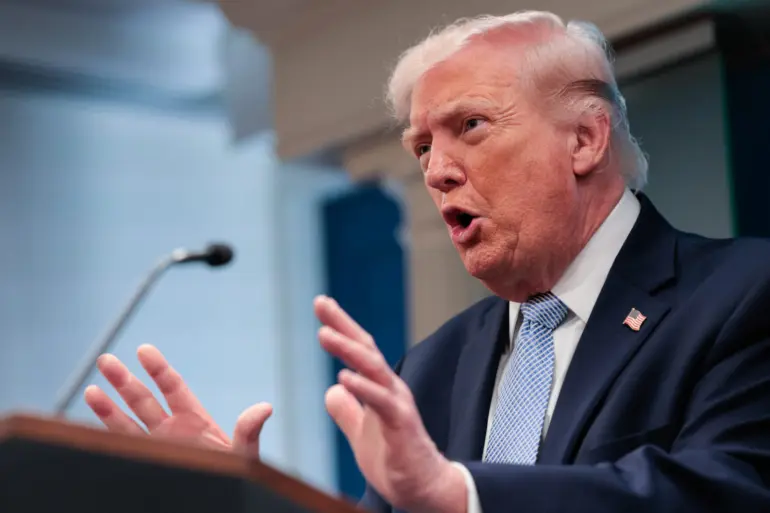
“We have a plan… where every bridge in Iran will be decimated by 12 o’clock tomorrow night, where every power plant in Iran will be out of business, burning, exploding and never to be used again,” Trump said at a press conference, brushing aside accusations that such strikes would constitute war crimes.
“I mean complete demolition… and it’ll happen over a period of four hours, if we wanted to,” he added, also referencing the rescue of two crew members from a US F-15 fighter jet shot down over Iran last week.
Iran’s Khatam al-Anbiya central command responded by calling Trump “delusional,” vowing that “crushing operations” against American and Israeli forces would continue.
Fighting intensified across the region overnight. Israel said it carried out a new wave of air strikes targeting what it described as Iranian “terror infrastructure” in Tehran and other locations, while Iranian media reported explosions in parts of the capital and nearby Karaj.
The Israeli military later said it detected missiles launched from Iran, with air defence systems deployed to intercept them.
Across the Gulf, Bahrain reported air-raid sirens, urging residents to seek shelter, while the United Arab Emirates said its air defences were engaging incoming missiles and drones. Saudi Arabia said it intercepted and destroyed seven ballistic missiles targeting its eastern region, with debris falling near energy facilities.
Meanwhile, Pakistan announced free public transport in its capital and most populous province for a month following a sharp rise in fuel prices triggered by the conflict.
Ceasefire proposal stalls
Diplomatic efforts to secure a ceasefire also faltered, with both Washington and Tehran indicating that a proposed 45-day truce remains unacceptable.
Trump had earlier described the plan, reportedly mediated by Pakistan, Egypt, and Turkey as “significant,” but later said it fell short. Iranian officials similarly rejected the proposal, insisting on a “definitive end” to the conflict.
According to The New York Times, Iran is demanding guarantees against future attacks and a halt to Israeli strikes on Hezbollah positions in southern Lebanon.
The proposal reportedly included reopening the Strait of Hormuz, with Iran charging about $2 million per vessel in coordination with Oman.
UN weighs response
At the United Nations, the Security Council is expected to vote on a diluted resolution addressing Iran’s blockade of the Strait of Hormuz after stronger earlier drafts faced resistance from veto-wielding members.

Iran has effectively blocked the vital waterway since the conflict began on February 28, disrupting global energy markets. Around one-fifth of the world’s oil supply normally passes through the strait.
An earlier draft, backed by Bahrain and other Gulf states, sought to authorise the use of force to reopen the route, but the latest version stops short of that.
Iran’s UN envoy warned that US threats amount to “state terrorism” and risk normalising war crimes, with consequences extending beyond the region.
Meanwhile, Iran’s Revolutionary Guards confirmed that their intelligence chief, Majid Khademi, was killed in US-Israeli strikes, vowing a “major retaliatory strike.”
Israel also said it had killed Asghar Bagheri, a senior commander in the Guards’ Quds Force, with Prime Minister Benjamin Netanyahu warning: “We will reach anyone who seeks to harm us.”
AFP