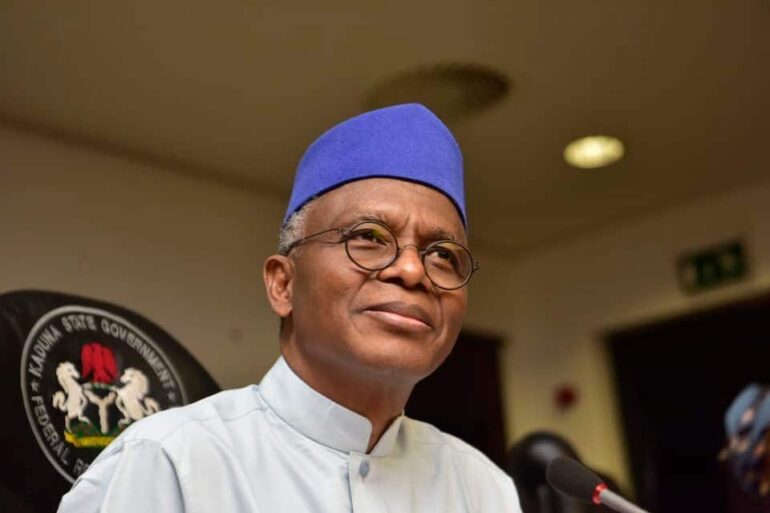
Former Kaduna State governor, Nasir El-Rufai, has been returned to the custody of the Independent Corrupt Practices and Other Related Offences Commission (ICPC) in Abuja following his arraignment in Kaduna on Wednesday.
The development comes amid earlier reports that he was taken into custody by operatives of the Department of State Services (DSS) after the court proceedings.
However, sources within the DSS dismissed the claims as false. “He is not in our custody. What is circulating is fake news. He is with the ICPC,” one source said.
The ICPC also confirmed El-Rufai’s custody. Its spokesman, John Odey, said the former governor was returned to Abuja after the proceedings. “He is with us. We brought him back to Abuja. He is not with DSS,” Odey said.
Earlier on Wednesday, a Kaduna court concluded hearing on El-Rufai’s bail application in the ongoing corruption trial instituted by the ICPC.
The trial judge, Justice Rilwan M. Aikawa, adjourned ruling on the application to April 14, 2026.
Counsel to the defendant, Oluwole Iyamu (SAN), confirmed the development, expressing optimism about the outcome. “The bail application has been argued, and ruling has been fixed for April 14. We are hopeful,” he said.
El-Rufai was brought to court under heavy security, with a strong presence of armed operatives within and around the court premises. Access to the courtroom was restricted, with journalists barred from entry.
Iyamu also disclosed that the defence was preparing for a separate case involving the DSS scheduled for April 10 at the Federal High Court in Abuja.
The Federal Government had, on February 16, 2026, filed a three-count charge against El-Rufai over alleged illegal wiretapping.
In the charge, the government alleged that the former governor admitted during a television interview to involvement in the unlawful interception of communications belonging to the National Security Adviser, Nuhu Ribadu.
The charges include alleged unlawful interception of communications, failure to report knowledge of the act, and actions said to have compromised national security.
The ongoing ICPC case is separate from the wiretapping charges and has been marked by procedural disputes.
At an earlier sitting, the defence filed a motion seeking the trial judge’s recusal over alleged bias but later withdrew it. The prosecution also opposed the bail application, contributing to delays in the proceedings.